Sourced fact
The News
Pacific islands are facing increasing threats due to climate change, with rising sea levels posing a danger of making some lands uninhabitable. Ani Rasemar, the chief climate negotiator for the Alliance of Small Island States, stated that rising sea levels are already threatening to render some islands uninhabitable. This week, world leaders are gathering in Fiji to discuss issues related to the upcoming international climate conference in Turkey.
These discussions provide an opportunity for scientists to highlight the urgency of climate action. Rasemar told DW, "It is an opportunity to draw attention to the impacts on vulnerable islands that are being ignored." She added that islands are facing real impacts of rising sea levels, including frequent flooding and loss of fresh water due to saltwater intrusion.
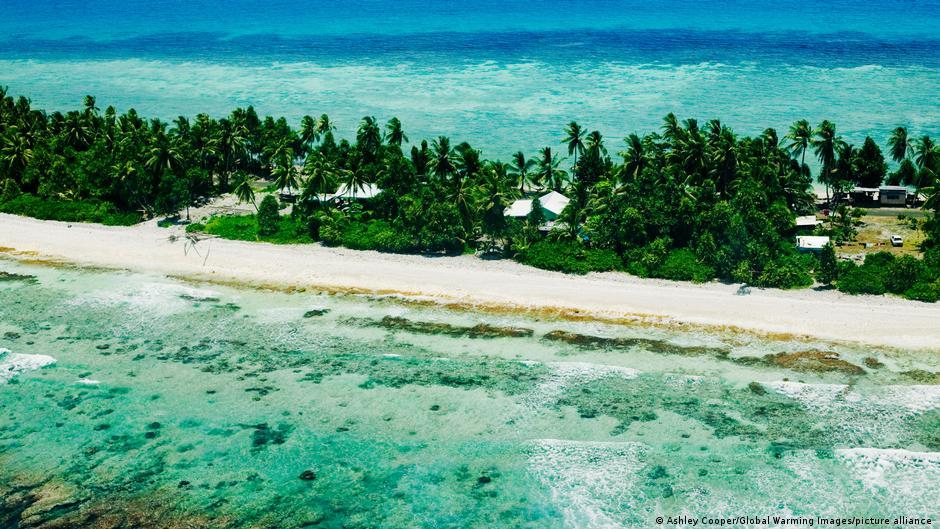
In Tuvalu, which averages about two meters above sea level, residents face real threats from rising sea levels. Prime Minister of Tuvalu, Enele Sopoaga, said at the United Nations General Assembly, "The world must act now with urgency and without delay to protect the future for coming generations." Rasemar also pointed out that ocean warming leads to coral bleaching and threatens local income sources.
Small island states are pushing for a new commitment to achieve the goal of keeping global temperature rise to 1.5 degrees Celsius, an objective set in the 2015 Paris Agreement. However, a UN report in September indicated that temperatures could reach 1.8 degrees Celsius even under the best scenarios. Natasha Green, project director at E3G, said that poor countries severely affected by climate impacts need help from wealthy nations to adapt to these impacts.
Among the key issues in ongoing discussions is climate finance. Poor countries are demanding more money from wealthy nations to help them adapt to climate change. Laura Schäfer, head of the international climate policy division at Germanwatch, expects Australia, which will host the next climate conference, to deal with tough questions about how to fund climate damage. Discussions aim to accelerate the transition away from fossil fuels, as scientists have indicated that this is the only solution to contain global temperature rise and mitigate the impacts of climate change on islands and coastal areas.
Analysis & context
Analysis & Context
From an analytical perspective, the world faces significant challenges in addressing climate change, particularly for small island states suffering from severe impacts. These nations face serious threats to sources of livelihood and cultural identity due to rising sea levels. Scientific reports indicate that transitioning away from fossil fuels is the only solution to reduce global temperatures and avoid the worst impacts of climate change.
In a broader context, less developed countries face challenges in securing the necessary funding to adapt to climate changes, especially since they have contributed little to climate change. Less developed countries are demanding more money to help the most vulnerable adapt to climate changes. Major countries play a crucial role in providing financial and technological support to these nations for climate adaptation.
It is worth noting that less developed countries face challenges in adapting to climate changes, particularly in areas such as agriculture, health, and infrastructure. Less developed countries aim to raise awareness of the challenges they face and enhance international support for them in the face of climate change.