Sourced fact
The News
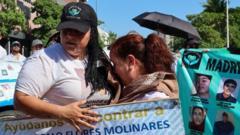
Thousands of residents gathered in the northern Mexican city of Culiacán on Sunday to continue their demand for an end to the violence that has paralyzed the region for two years. Protesters, dressed in white and carrying photos of victims and flags bearing slogans calling for peace, joined forces to mark the second anniversary of the bloody war between two Sinaloa cartel factions, each accusing the other of betrayal.
This conflict, which erupted after the arrest of drug lord Ismael "El Mayo" Zambada, has caused a massive surge in deaths and forced disappearances within the state of Sinaloa, home to more than three million people. Official statistics indicate that extortion and robbery crimes have also risen sharply, while the warring groups have periodically closed roads and targeted vehicles.
Among the protesters were relatives of violence victims, including the father of a one-year-old child who was killed by a bullet during an armed clash last week, as well as business leaders, civil society organizations, and Catholics. During his opening remarks, the Bishop of Culiacán called on the warring groups to stop the violence, stating that power, money, or land hold no value compared to human life.
Sergio Esquer, a businessman and leader of the left-wing opposition party "Civil Movement," highlighted that over 5,000 commercial establishments have been shut down since the conflict began, describing the situation as a state catastrophe. In the political background, Governor Rubén Rocha faces a U.S. investigation and allegations of supplying drugs to cartels, leading to his temporary resignation before returning to office amid ongoing judicial probes. He later requested another leave following comments by President Claudia Sheinbaum regarding authority.
Analysis & context
Analysis & Context
Analytically, this internal conflict between cartel factions represents an existential challenge not only for the city of Culiacán but for the entire state of Sinaloa, where streets have transformed into daily war zones exposing children and women to direct danger. The participation of business leaders and the Church in organizing the protest reveals the depth of the crisis, which has transcended organized crime to become a comprehensive socio-political issue threatening regional stability.
In the broader context, the impact of this violence extends beyond security concerns to include a severe economic collapse and a decline in trust in government institutions, as evidenced by Governor Rubén Rocha's temporary resignation and subsequent return amidst continuous judicial investigations. This interplay between organized crime and politics highlights the complexity of Mexico's landscape, where cartel interests become entangled with administrative corruption.
Furthermore, the nature of escalating violence—including ambushes, road blockades, and shootings from speeding vehicles—reflects a shift in cartel tactics toward comprehensive warfare against civilians. This transformation underscores the risk of the state becoming an uninhabitable zone, where daily crime rates increase and local communities feel deep despair about peaceful solutions.