Sourced fact
The News
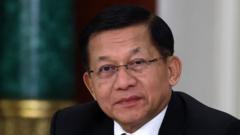
Myanmar President Min Aung Hlaing has announced his refusal to comply with parts of the International Court of Justice (ICJ) ruling, which he described as "inappropriate," marking his first public statement since the historic ruling last week. This announcement was made during a meeting held on Wednesday, where he stated that the criminal terminology negatively impacted the country's reputation but affirmed that Myanmar would take actions consistent with those of a responsible state without complying with the requirements it rejects.
The ICJ ruling in the case brought by Gambia in 2019 marks the first time a state has been convicted of committing genocide against the Muslim Rohingya minority in Rakhine State during a military campaign in 2017 that killed thousands of civilians and forced over 700,000 to flee. The court decided by relative consensus that Myanmar had violated significant portions of the 1948 Convention on the Prevention and Punishment of the Crime of Genocide and ordered it to pay proportional compensation, with the amount to be determined later, along with immediate cessation of violations and investigation of suspects.
A court spokesperson clarified that the ruling is final and cannot be appealed, while noting that the court lacks executive authority to enforce its decisions and relies on the UN Security Council and political pressure to ensure compliance. The Rohingya community and human rights organizations welcomed this symbolic decision, which was recognized by more than ten countries, while the United Kingdom announced sanctions against senior military leaders in Myanmar.
Myanmar's military regime led by Min Aung Hlaing has faced comprehensive international isolation since its 2021 coup that ousted civilian President Aung San Suu Kyi and sparked a civil war that has devastated the country. Despite the president's attempts to reintegrate his country into the international community, the military regime remains constrained by broad sanctions and faces difficulties in participating in major diplomatic forums.
Analysis & context
Analysis & Context
From an analytical perspective, Myanmar's refusal to implement the ruling emerges as a direct challenge to international judicial authority and marks the first time in the history of the International Court of Justice that a state has rejected a final, non-appealable judgment. Although the court lacks direct enforcement power for its decisions and relies on the UN Security Council and political pressure, this rejection places Myanmar in an internationally tense position and reinforces the isolation of its military regime, which has been managing a civil war since the 2021 coup.
In the broader context, the International Court of Justice ruling represents formal judicial recognition of one of the worst human rights violations in modern times, where the court condemned Myanmar for committing genocide against the Muslim Rohingya. The international community welcomed this judgment; the United Kingdom imposed sanctions on senior military leaders in Myanmar, while more than twelve countries recognized the ruling, reflecting growing global pressure on General Min Aung Hlaing's regime to reintegrate its country into the international community.
The Rohingya file is one of the most complex issues in South Asia, where hundreds of thousands of refugees live in camps in Bangladesh following systematic forced displacement. Although the ruling had a largely symbolic character, it represents a victory for human rights groups and the Rohingya communities that have long sought global recognition of their suffering over many years.