Sourced fact
The News
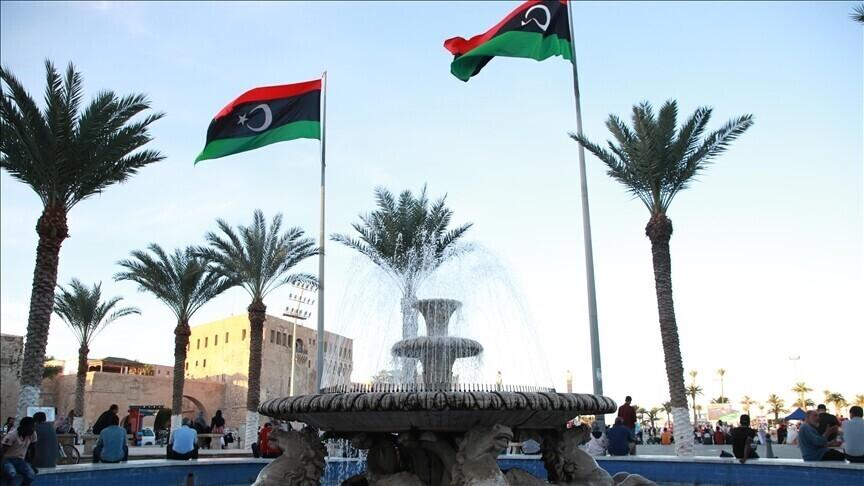
Fourteen members of a Libyan committee met in Tunisia on Sunday to discuss the implementation of an agreement signed last month in Tripoli regarding the holding of national elections, according to a statement issued by the United Nations Support Mission in Libya. The committee reaffirmed its commitment to implementing this agreement and its pursuit of elections that meet the aspirations of Libyans to achieve stability and prosperity under unified and legitimate institutions.
The meeting, chaired by the UN Special Representative for Libya, Hana Titi, included four representatives of the current National Unity Government in Tripoli and four others from the current General Command in the East. The Mission clarified that this session was the ninth for the smaller consultative council and the first since the parties signed an agreement to reshape the National Elections Commission and amend electoral laws.
In the context of the deliberations, members reviewed general positions on the agreement, including support expressed by the UN Security Council and the current Libyan House of Representatives in Benghazi. They also agreed to continue consultations with other Libyan parties to gather more support for the agreement, while noting that the Assembly of Deputies had unanimously approved this agreement last week.
It is worth mentioning that the committee has held UN-sponsored talks since April as part of a roadmap unveiled by Titi in August 2025 aimed at ending political stalemate and unifying executive power. Although President Mohamed Takala of the High State Council has officially rejected the agreement so far, Libyans hope that these delayed elections will end years of political and military conflict that followed the toppling of Muammar Gaddafi's regime in 2011.
Analysis & context
Analysis & Context
From an analytical perspective, this meeting represents a crucial step in Libya's long reconciliation path, which has been witnessed globally since 2011 after the fall of Muammar Gaddafi's regime. These efforts aim to end years of political and military conflict by transitioning from successive transitional periods to permanent institutions capable of managing state affairs.
In the broader context, the biggest challenge remains unifying executive power between the current government in Tripoli led by Abdul Hamid Dbeibah and the government appointed by deputies in Benghazi led by Omar Hassan Hazeem. The current agreement seeks to break the political deadlock through a technical and political electoral framework acceptable to both sides.
Data from the United Nations indicates that the UN-led process aims to move toward free and fair elections, with a focus on unifying governmental institutions and establishing a new unified government. This approach reflects strong international will to support Libya's stability as a fully sovereign state.
Libyans hope that these very delayed elections will end decades of political and military conflict, thereby opening new horizons for rebuilding the Libyan state after years of internal and external disturbances.