Sourced fact
The News
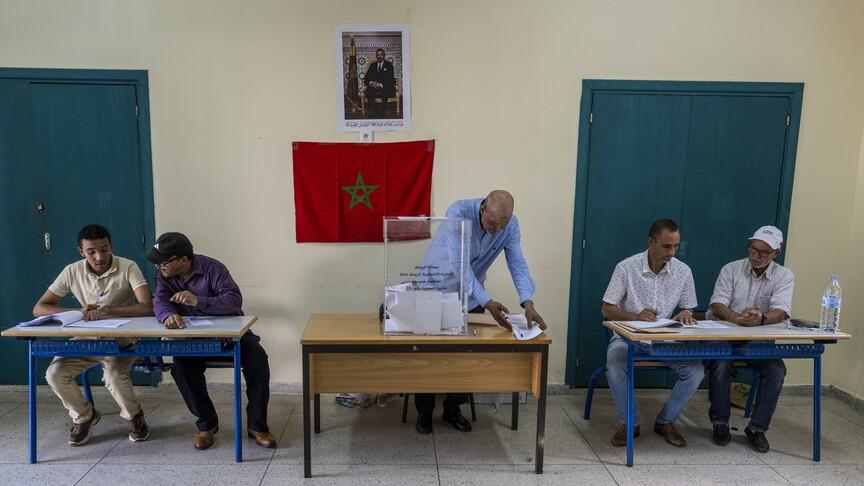
The Moroccan Ministry of the Interior has announced the results of the legislative elections held in the country, where the Authenticity and Modernity Party (PAM) leads the political scene with 97 seats in the 395-member parliament. This achievement comes after the party secured a majority of seats compared to other parties that participated in the poll, which saw voter turnout at 38% nationwide.
Minister of the Interior Abdoullah Lafti stated at a press conference in Rabat, the capital, that voting proceeded under "natural conditions except for isolated cases" that did not affect the electoral process, emphasizing that the preliminary results clearly reflect the will of the Moroccan people. He noted that the Rally National Independents (RNI) came in second place with 66 seats, while the Istiqlal Party won 65 seats to take third place.
Seats were distributed among other parties: Justice and Development received 54 seats, followed by the Popular Movement Party with 29 seats, then the Socialist Forces Union with 26 seats. The Progress and Socialist Party won 19 seats, while the Constitutional Union secured 17 seats. The Left Alliance and the Democratic Social Movement shared eight seats between them.
Lafti stated that the number of registered voters reached 15.8 million, noting a decline in participation compared to the 2021 elections, in which RNI achieved better results by winning 102 seats. He added that forming the new government will require political consultations to determine the Prime Minister from the party that wins the required majority of 198 seats.
The results showed a contrast with the 2021 elections, where RNI led an coalition government including PAM and the Istiqlal Party under the leadership of Aziz Akhannouch, meaning the upcoming government will face new political, economic, and social challenges. In addition, the new government will need to work on projects related to preparing Morocco to host the 2030 FIFA World Cup with other countries.
Analysis & context
Analysis & Context
From an analytical perspective, PAM's victory in leading the results indicates a shift in Morocco's political balances, particularly given the lower turnout, which may reflect changes in electoral participation dynamics or socio-economic conditions that influenced voters. This drop from 50% to below 39% raises questions about the general level of satisfaction or trust in the democratic process compared to previous elections.
In a broader context, the incoming government faces significant political, economic, and social challenges, in addition to projects linked to preparing Morocco to host the 2030 FIFA World Cup with another country. Forming a new parliamentary majority will require the combined efforts of multiple parties, including PAM, which has become the largest force, potentially changing the nature of ruling coalitions compared to the current government led by Aziz Akhannouch.
The presence of the Justice and Development Party in fourth place with 54 seats reflects its continued political influence despite a decline from previous periods, while the Istiqlal Party occupies a strategically important position thanks to its broad electoral base and historical experience in Morocco's political landscape. These new distributions will form the basis of parliamentary and political debate in the coming period.
Finally, forming the new government will require complex negotiations between parties that did not secure an absolute majority, which could extend the duration of governmental stability or lead to unconventional alliances to ensure effective management of public affairs and major national challenges such as preparing for the 2030 World Cup.