Sourced fact
The News
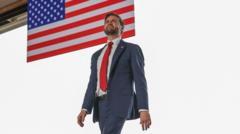
On Wednesday, U.S. Vice President J.D. Vance sparked a wide ripple of shock in Washington by directly blaming the war with Iran for his party's loss in the midterm elections, a move widely interpreted as an attempt to distance himself from President Donald Trump ahead of a potential 2028 race. In a precisely worded statement totaling about 600 words posted on X (formerly Twitter), Vance acknowledged that Trump's 2024 voters had abandoned Republicans in the midterms, noting that "the reason for our loss is the war"—a point the President himself made last night.
Trump had defended the war in interviews conducted late Tuesday and throughout Wednesday, admitting it played a role in Democrats' shift to control both the House and Senate. Although Vance's stance on the Iran war was an open secret in Washington, where he publicly supported the conflict since the U.S. and Israel struck Tehran in February, it is alleged that he expressed opposition during private meetings with administration officials. Nevertheless, these differences remained out of sight until now, but Vance made clear hours after the bitter electoral defeat for both sides that deciding to go to war was a clear political mistake.
Vance said: "If you want to argue it's worth it—that losing the Senate for the next six years is worth arguing—go ahead. Argue that it's a cost worth paying. Agree or disagree, at least this is honest." This statement was remarkable and has no recent precedent: it is hard to recall a moment in modern American political history when a vice president sharply diverged from the president over a major foreign policy issue.
Then came an even bigger surprise perhaps: Trump—who usually demands unwavering loyalty from his top aides—agreed with Vance that the midterms were "mostly" decided by the war, adding he would make the same choice again if given the same options. To reporters, Trump said, "I know how he feels about it. I think it was good," viewing preventing Iran from acquiring a nuclear weapon as necessary.
Analysis & context
Analysis & Context
Analytically, Vance's statement appears to be a method of separating himself from Trump, according to Daniel Byman, a foreign policy expert at the Center for Strategic and International Studies. Drawing a contrast with Trump would be a delicate maneuver if Vance seeks the presidency, requiring him to balance criticizing the president without losing the support of the Republican base.
In the broader context, this stance signals a shift in White House dynamics: while Trump has valued loyalty from his advisors, his openness to Vance's views may be an early sign that Trump would grant him significant space if he chooses to launch a presidential campaign. A Republican strategist named Ashley Davis described this situation as "putting a foot in the water to see what happens," suggesting a potential phase of political exploration for the future.
Furthermore, Vance outlined a political roadmap that anticipates a possible presidential run; his summary of the party's strategy to win voters includes four points: ending the war, focusing on cost of living and inflation, putting America first, and changing our relationship with Israel. This list encapsulates much of Vance's vision since entering the national political arena and resembles a core argument that could form part of his future campaign rhetoric.
However, debate continues over how far Vance has broken ties with Trump, as the message to Trump was reportedly shown before being posted online, according to The New York Times. Moreover, the president may change his mind and clarify that he will not tolerate any dissent from Vance or anyone else, especially since Trump remains eager for speculation about who will back him for succession in 2028.