Sourced fact
The News
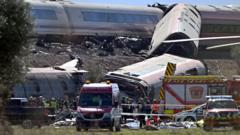
A high-speed train collision with a stopped train on the tracks has killed at least 68 people and injured dozens more in central Spain on Wednesday. According to BBC News, the incident occurred this morning when a moving train coming from Madrid collided with a train that was stopped on the track, causing multiple carriages to fall down a steep embankment.
The Spanish Ministry of Transport stated that a dual cause behind this horrific disaster is a malfunction in the computer system followed by a human error from the control center. Spanish Transport Minister Oscar Puente described the incident as one of the worst disasters in modern European history and also the worst train disaster in Spain in 13 years.
Survivors described the terrifying scenes they witnessed, where passengers were thrown into the air and trapped inside the rubble while they broke windows to escape. Salvador Ariza, a passenger on the state-owned Renfe train, said: "The destructive force of the crash was extremely severe," explaining that some passengers could not move because they were trapped between seats.
According to BBC News, the stopped train, operated by a private company called Iryo, carried 147 passengers and stopped due to a computer system malfunction. Minister Puente clarified that when a system failure occurs, Madrid's control center takes over for up to 24 hours, but it made an "unfathomable" decision to direct trains to move again without any speed limits.
Analysis & context
Analysis & Context
Analytically, this incident highlights the risks inherent in excessive reliance on automated systems in high-speed transport infrastructure, where even a minor technical glitch can turn into a massive human tragedy if not handled quickly and efficiently by humans.
In a broader context, Spain is currently facing a wave of deadly accidents on railway lines, with another disaster in January near Cordoba killing 46 people, making the current situation extremely worrying for both authorities and citizens alike.
The political reaction from the government, including Prime Minister Pedro Sanchez canceling all general commitments, reflects the severity of the crisis and public interest in infrastructure safety, especially with parliamentary elections approaching next month.
The incident also raises fundamental questions about the responsibility of transport management and how blame is distributed between technical errors and human decisions, a stance demanded by labor unions who called for Transport Minister Oscar Puente's resignation and refused to hold only the traffic manager responsible.