Sourced fact
The News
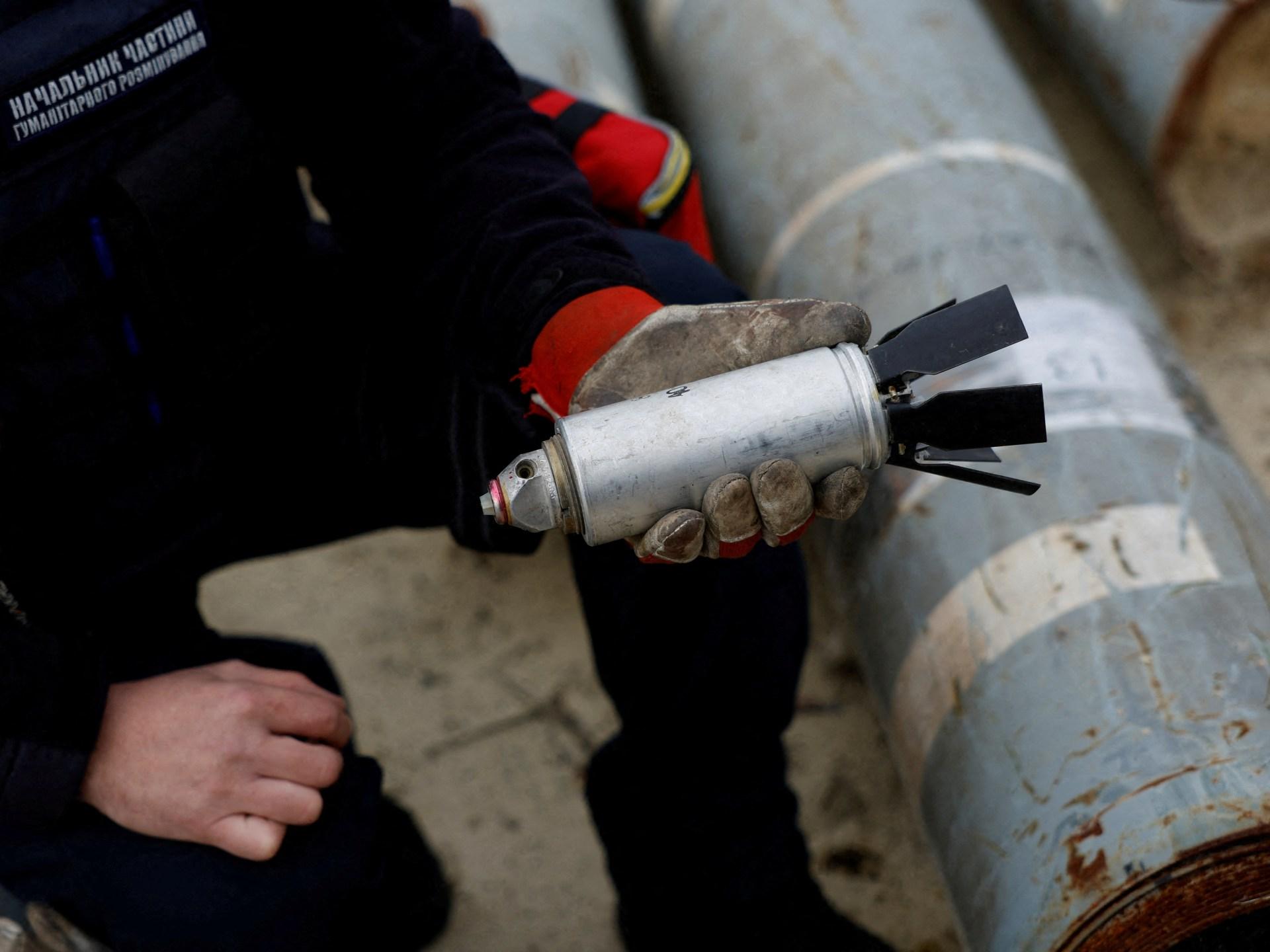
The year 2025 recorded the highest historical statistic for victims caused by cluster munitions, killing or injuring at least 1,063 people, according to a report issued by a global network of researchers. Most of these victims were civilians, including at least 34 children, and the injuries were distributed across countries including Afghanistan, Cambodia, Iraq, Lebanon, Syria, Ukraine, Russia, Myanmar, and others.
The report clarified that Ukraine was the country that recorded the highest number of victims for the fourth consecutive year, with its statistics accounting for 87 percent of total global victims; however, estimates suggest the actual figure may be higher due to many cases not being registered. Cluster munitions were designed to scatter small charges of explosives randomly, exposing civilians to danger, and some of these submunitions can remain unexploded for long periods after deployment.
The Convention on Cluster Munitions was adopted during the Oslo Process and entered into force in 2010 with the aim of protecting civilians, but it faced challenges when Russia and the United States voted against a UN General Assembly resolution supporting the convention for the first time since its inception in December. Additionally, Lithuania withdrew from the convention in March to become the first country to do so, while the Cluster Munition Coalition reported that Iran, Myanmar, Russia, Thailand, Ukraine, and Mali used these weapons despite the latter being a party to the agreement.
The year 2025 witnessed a notable rise in deaths and injuries due to cuts in U.S. foreign aid, which jeopardized cluster munitions removal operations, resulting in at least 117 additional people killed or injured. New evidence of production of these weapons was also discovered in countries including China, India, Israel, North Korea, Romania, Russia, and South Korea, while the report indicated that the United States plans to produce more of these bombs in the future.
Analysis & context
Analysis & Context
From an analytical perspective, the rise in victim numbers in 2025 to such high levels signals the continued expansion of non-conventional weapons classified among destructive weapons of mass destruction targeting civilians. The adoption of the cluster munition ban convention in 2010 was a historic step, but recent erosion of compliance—with Lithuania withdrawing and Russia and the U.S. voting against UN General Assembly resolutions—reflects the weakening of international standards that once protected civilians from these dangerous weapons.
In a broader context, the data indicates that armed conflicts in regions such as Ukraine, Afghanistan, and Myanmar remain major hotspots for the use of these munitions, underscoring the urgent need for stricter international monitoring. Furthermore, reports of weapon usage by states not party to the convention—or even by parties using them indirectly—highlight the gap between legal commitments and the on-the-ground reality of modern warfare.
The report also demonstrates how political and economic factors affect a state's capacity to address the aftermath of these munitions; cuts in U.S. foreign aid disrupted unexploded ordnance clearance operations, leading to 117 additional deaths and injuries in 2025 alone. This illustrates how political decisions made in capitals can have direct and tragic humanitarian consequences on the ground.
Finally, continued production of these munitions in multiple countries such as China, South Korea, and Russia indicates that military demand remains high despite significant human risks. This reality calls for urgent diplomatic efforts to revive the spirit of the international convention and protect civilians from weapons that constitute a blatant violation of international humanitarian law.