Sourced fact
The News
New reports have revealed suspicions that a German boat trader working for a small company named MaReBoote is a primary supplier to networks focused on transporting migrants across the English Channel. This information was obtained through a review of hundreds of judicial, tax, and police documents collected by the British broadcaster BBC in collaboration with other European media outlets. The analysis indicates that nearly one-third of the small-scale crossings recorded in the first four months of this year utilized boats or engines linked to the aforementioned German company.
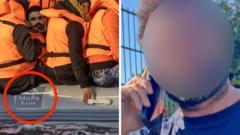
Company manager Marvin Rother faces a threat of imprisonment if extradited to France, where an European Arrest Warrant has been issued against him for alleged obstruction of justice and aiding smuggling operations. Official suspicions against him date back to a random raid in May, when equipment such as boat engines and fuel tanks were found inside a vehicle bearing the company's logo in the French area of Blue-Sur-Mer. One of the individuals accompanying Rother at the time of his arrest admitted that they delivered this equipment to migrants for sums reaching up to 1,000 euros per operation.
Investigations suggest that the company's equipment was linked to fatal accidents resulting in the deaths of four people, including a Syrian migrant who was 20 years old when he died. His body was found inside a boat bearing the MaReBoote logo after an incident off Calais in January last year, marking the first recorded migrant death in the English Channel during 2025. Investigators confirmed that evidence against Rother came from confessions by accused accomplices and secret recordings of a prison cell containing a smuggling network leader allegedly involved in the operations.
In an interview, Marvin Rother refused to answer questions when approached by authorities at his workplace in Warnemünde and informed police of their presence. He also accused journalists of harassment and did not directly address the allegations made against him despite previous written requests for a comment from his side. His lawyers are now struggling to prevent his extradition to France on grounds of French prison overcrowding, arguing that the case should be adjudicated in Germany.
French deputy Samuel Faniels explained that selling boats is legal in itself but becomes a crime if the seller is aware of their use in human trafficking or people smuggling. A new German law prohibiting assistance in smuggling to the United Kingdom was used for the first time after equipment linked to the company was seized during an inspection raid. Figures show that the number of crossings across the channel dropped significantly in 2026 thanks to law enforcement efforts, which a British official described as a major factor in this decline.
Analysis & context
Analysis & Context
From an analytical perspective, this revelation sheds light on the complex global supply chain for organized crime networks providing equipment necessary for smuggling operations, where legal boat sales turn into crimes once the seller becomes aware of their intent to use them for human trafficking. The case illustrates how small companies in countries like Germany can become targets of international scrutiny when their role in supporting cross-border illegal activities is clarified.
In a broader context, reports indicate significant legal changes in Germany following Brexit, where assisting in smuggling migrants toward the United Kingdom became an explicit crime at the end of last year. German authorities utilized this new law for the first time when seizing equipment linked to Marvin Rother, reflecting a shift in approach to combating illegal immigration.
The file also highlights the importance of evidence derived from criminal network confessions and prison cell recordings, where conversations with a major criminal purchasing maritime equipment from a company bearing a name similar to the accused's ("Marvin") were observed. These details confirm how modern investigations rely on monitoring technologies and digital data collection to track organized crime networks across borders.
Finally, the report underscores the human cost of these operations, as the company's equipment was linked to fatal accidents resulting in the deaths of four people, including a Syrian child who was due to turn twenty. These facts affirm the necessity of linking legal and ethical aspects in the fight against sea-based human smuggling.