Sourced fact
The News
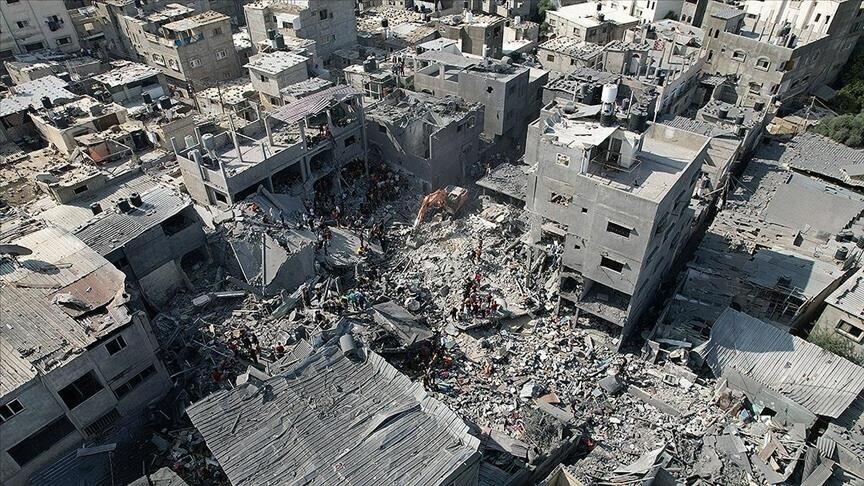
The Anadolu Agency reported that the Gaza Government Media Office rejected the Israeli military's claim that it did not target the residential Al-Saada building. It affirmed that the Israeli strike launched on October 9, 2023, was the direct cause of the building's collapse, which resulted in the deaths of 21 Palestinians.
According to Anadolu Agency, the Gaza Media Office denied the version of events published by the Israeli military on the American platform X (formerly Twitter), noting that the bombing targeted the building's foundations and its first and second floors, causing severe structural damage that led to its total collapse.
The source clarified that engineering reports and residents' testimonies confirm Gaza's claims, while describing the Israeli military's attempt to absolve itself of responsibility as a desperate and obvious effort to avoid legal accountability within a systematic policy of media distortion.
The agency also added that the building collapsed in the Sinaa area of western Gaza after the ceasefire that began on October 10, 2025, halted. Dozens of damaged buildings subsequently collapsed onto residents who had no safe shelter, amid a severe shortage of tents and a ban on entry to temporary housing facilities.
The Media Office called on the international community and United Nations bodies to document these incidents and demand Israel's accountability before international courts. This is necessary to protect civilians and infrastructure in Gaza from further destruction and crimes against humanity.
Analysis & context
Analysis & Context
From an analytical perspective, this news item highlights the ongoing tension between Israeli narratives and Palestinian narratives regarding the nature of damage inflicted on buildings in Gaza, where Israel uses claims of non-direct targeting to justify its actions to global public opinion.
In a broader context, reports from the United Nations and human rights organizations indicate that the destruction of infrastructure in Gaza since the start of the war in 2023 has led to a catastrophic housing crisis. Thousands of displaced persons live without safe shelter amid a severe shortage of tents and temporary accommodation, which is banned from entering the area.
The analysis also sheds light on the humanitarian dimensions of this disaster, where many Palestinians were killed when their homes—previously damaged—collapsed, thereby increasing the suffering of displaced people who have no alternative but to live in harsh conditions that threaten their lives, especially during winter.
The analysis concludes by reminding us that these incidents are not isolated but part of a widespread pattern of systematic destruction targeting civilians and infrastructure, raising questions about Israel's adherence to international humanitarian law and the protection of civilians during military operations.