Sourced fact
The News
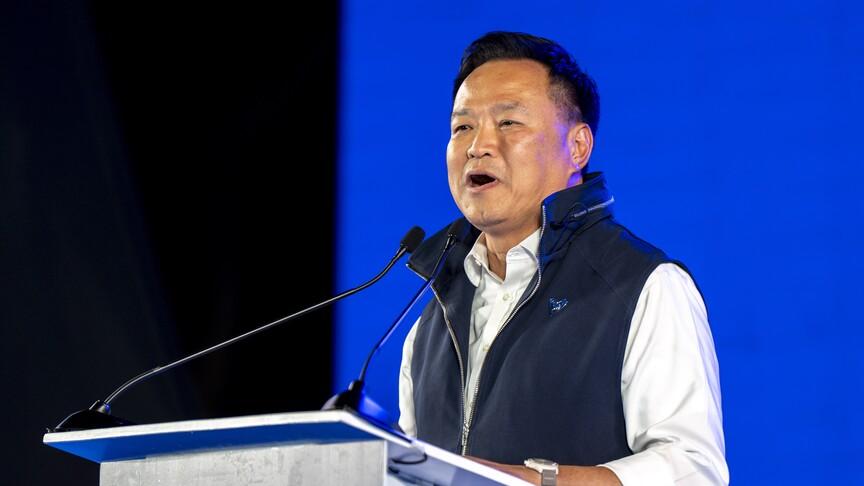
Thai Prime Minister Anutin Charnvirakul called for enhanced protection of Palestinians and the revival of dialogue with Cambodia in a speech delivered at the United Nations General Assembly in New York on Thursday. He emphasized that human rights must be universally practiced, urging to move beyond formal decisions to achieve real improvements in people's lives. He also called for empowering a Myanmar-led solution owned by the country itself through the Association of Southeast Asian Nations (ASEAN).
Regarding the situation with Cambodia, the Thai spokesperson clarified that Bangkok seeks to resolve remaining disputes through bilateral dialogue to restore trust. He noted that Cambodia's request to initiate compulsory dispute settlement procedures under the United Nations Convention on the Law of the Sea is regrettable from Thailand's side, which reaffirms its good faith in participating in such procedures. He recommended strengthening security cooperation along the shared border to combat cyber fraud and mine clearance.
On another front, Fiji President Ratu Wiliame Natanaele Naiqama warned against the spread of HIV/AIDS in the Pacific Islands, where one in every 60 adults lives with the virus. This spread is partly linked to needle misuse stemming from methamphetamine smuggling, calling for affordable treatment and stronger international cooperation against drug networks.
He also urged wealthy nations to convert climate finance pledges into actual implementation and simplify financing mechanisms for small island states. He further called for UN reform to ensure that small islands remain sovereign states with maritime rights and membership in the organization despite rising sea levels.
Analysis & context
Analysis & Context
Analytically, the statement by Thailand's president highlights growing tensions between global moral demands and the complex geopolitical reality in the Asia-Pacific region. Anutin Charnvirakul's speech illustrates how medium-sized countries like Thailand attempt to balance their support for human rights with their pursuit of resolving regional disputes through traditional diplomatic channels before resorting to compulsory judicial arbitration.
In the broader context, Fiji president's warning about HIV/AIDS and climate change exemplifies the increasing interplay between health and environmental crises in small island states. Epidemics are not merely medical issues but indicators of fragile socio-economic systems under pressure from climate change and illicit drug trafficking, necessitating comprehensive international responses linking public health with environmental security.
Fiji's demands for UN reform and protection of small island state rights also reflect growing concern that the current structure of the international organization may be insufficient to address challenges to human existence in the face of rising ocean levels. This points to an urgent need to update international financing mechanisms and representation mechanisms for states most affected by climate change impacts.
Finally, ASEAN's role as a vital platform for coordinating regional efforts to resolve crises in Myanmar is highlighted, where Thailand's president supports a Myanmar-owned solution. This approach reflects a shift towards regional solutions that respect national sovereignty while maintaining regional stability amidst increasing security challenges such as cross-border drug trafficking and cybercrime.