Sourced fact
The News
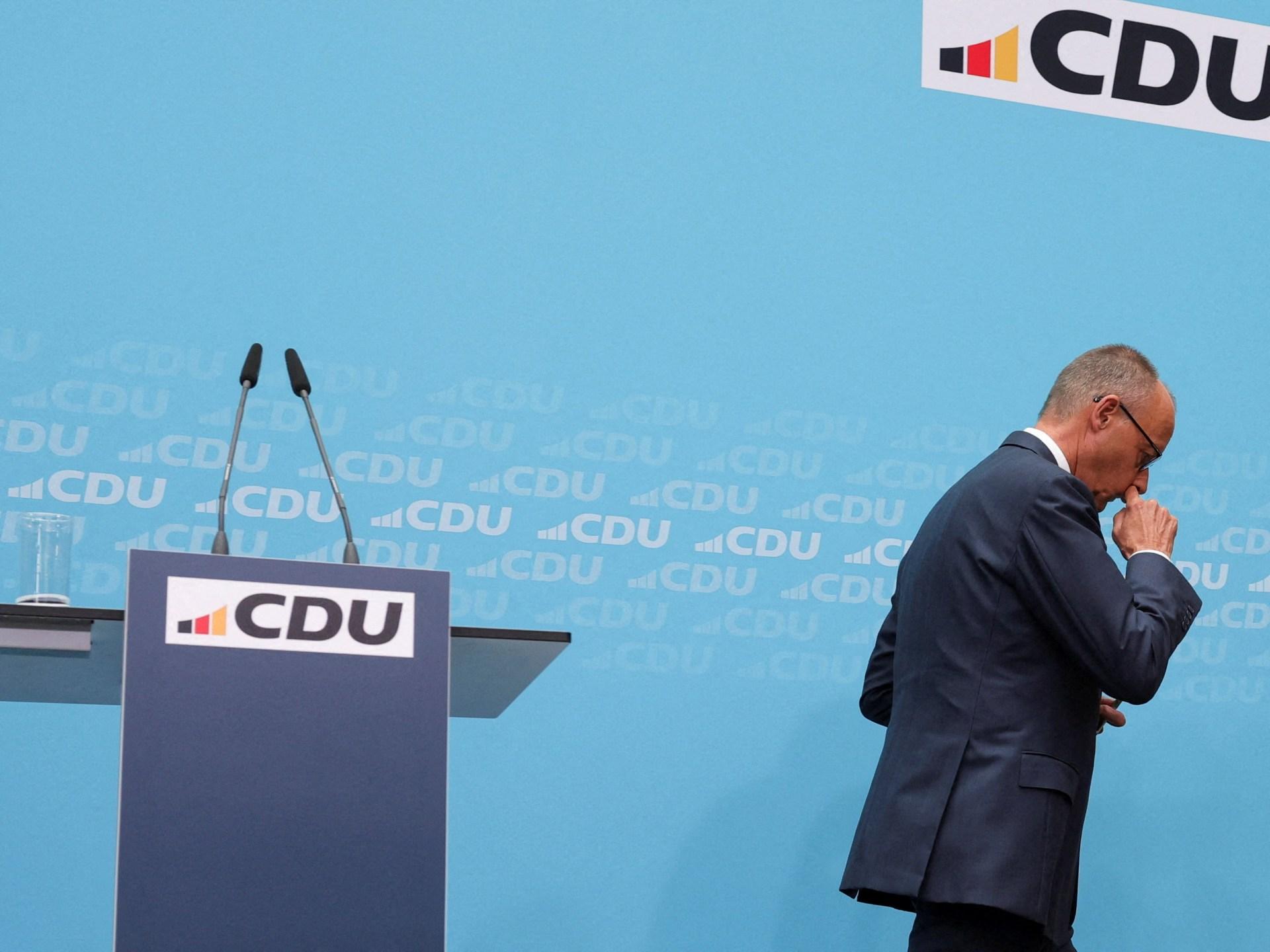
Germany is facing a political collapse as Chancellor Friedrich Merz's popularity ratings drop to their lowest recorded levels, while the Christian Democratic Union party suffers heavy losses in regional elections. Reports indicate that German media focuses on blaming Merz for his weak campaign and forming an unpopular alliance with the Social Democratic Party.
The author points out that what is actually dying in Germany is not just a dominant party, but the image of moderate centre politicians as professionals after three decades of illusion. It has now become clear that this group was neither moderate nor competent, but rather hardliners implementing policies that eroded German society's ability to continue.
In France, President Emmanuel Macron pushed the country toward the edge of far-right rule by applying unrealistic centralist policies and promises of a French renaissance that were impossible to fulfill. He also enforced raising the retirement age to 64 in a time when poor workers are suffering from declining life expectancy, while granting tax breaks only to the rich.
In the United Kingdom, both the Conservative and Labour parties adopted the same austerity policies started by Margaret Thatcher and continued by Tony Blair to serve the financial elite. As a result, fear and hatred against the middle class and the marginalized now spread across Britain due to increasing inequality.
The author explains that the nature of these centre parties has not changed; they treat political opposition as a problem to be managed rather than a proposal worthy of response. He notes that the European Union was deliberately designed to move economic policy beyond the scope of elections and prevent any logical economic alternative from emerging.
Citing his experience in Greece in 2015, where the failed stability program was broken despite banks admitting its conditions were illogical, the author reaffirms that centralist politicians refuse to deviate from their hardline economic creed.
Analysis & context
Analysis & Context
From an analytical perspective, the source clarifies that extremism is not measured by its position on the left-right political spectrum, but by how it handles difference; the European centre is considered the most extreme since World War II because it built a practical union aimed at keeping economic policies outside the scope of elections.
In a broader context, the text indicates that this extremism manifests in the design of a monetary union lacking a financial and democratic political union, allowing certain economic powers to exploit people and companies without real democratic oversight.
The report also highlights how austerity policies adopted by centre political parties in countries like France and the UK have worsened poverty and inequality, paving the way for the rise of far-right parties that exploit this social and economic void.
Finally, the analysis confirms that modern European history is witnessing a dangerous transformation where institutions once called "rational" and "moderate" have turned into tools to enforce a strict economic ideology that ignores democratic diversity and entrenches inequality among European nations.