The News
A magnitude 5.0 earthquake that struck the California coast on Saturday caused extensive damage to homes and businesses across the Los Angeles area, according to a BBC News report.
The quake occurred at 9:30 AM local time (17:30 UTC), just six miles from Manhattan Beach, and was followed by more than 40 aftershocks, as confirmed by the United States Geological Survey (USGS).
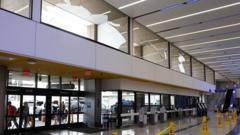
Local reports indicate that ground shaking shattered windows at Los Angeles International Airport (LAX) and forced the closure of part of a building corridor. Additionally, a Delta Air Lines aircraft had to abort its landing approach moments before impact due to the quake's intensity.
At Bodega Supermarket in Hermosa Beach, the company suffered approximately $45,000 in losses from wine inventory after the main shock and subsequent aftershock shattered hundreds of bottles on the floor, according to store representative Jay Hirson.
Hirson noted that shelves were not secured with safety cables because they were previously deemed unnecessary; however, simple cable systems are typically used in seismic zones to prevent product damage. He recalled no similar event since the 1994 Northridge earthquake, which measured 6.7 in magnitude and claimed 57 lives, noting that California is the second most seismically active state after Alaska.
Automated safety protocols were activated at Chevron and Torrance refineries, triggering emergency lighting systems to prevent potential explosions. The Los Angeles Fire Department reported no serious injuries or major structural damage as of their Saturday alert.
Analysis & Context
Analytically, this event represents a relative anomaly in California, an area accustomed to frequent minor tremors; the region has not experienced quakes of this magnitude in over a decade. While California is indeed the second most seismically active state after Alaska, repeated major shocks of 4.0 magnitude or higher remain rare compared to the daily minor vibrations that most residents do not feel.
In a broader context, the 1994 Northridge earthquake serves as a critical historical reference point. That 6.7-magnitude quake claimed 57 lives and destroyed numerous roads and buildings. Jay Hirson's inability to recall a similar event since then highlights the stark contrast between frequent minor tremors and rare, high-impact earthquakes that leave clear economic and social scars.
Geological data indicates that Southern California experiences a medium-sized earthquake roughly every three minutes on average, most of which are too small for humans to feel. Nevertheless, quakes exceeding 4.0 magnitude occur approximately 15 to 20 times annually. However, the recurrence of numerous aftershocks following a single event remains an unusual phenomenon requiring urgent response from emergency management and local infrastructure authorities.
The News
A magnitude 5.0 earthquake struck the Los Angeles area early Saturday, causing physical damage to commercial buildings and airports, followed by more than 40 aftershocks, according to the USGS. The quake hit at 9:30 AM Pacific Time (17:30 GMT), located approximately six miles from Manhattan Beach's coastline.
The vibrations caused windows at Los Angeles International Airport (LAX) to shatter and forced the closure of part of a building corridor in one of the terminals. Seismic safety systems were activated at oil refineries, triggering precautionary fire suppression measures. Local reports also stated that car alarms went off automatically and picture frames fell against walls inside homes.
The Los Angeles Fire Department announced no serious injuries or major structural damage in a Saturday alert, despite significant material losses incurred by some retail stores. Bodega Supermarket in Hermosa Beach lost about $45,000 worth of wine inventory after many bottles crashed to the floor due to the strong shaking.
Jay Hirson, the store representative speaking to the British newspaper, stated that they suffered two consecutive losses within hours between the main quake and a secondary aftershock that hit while customers were still inside. He added that shelves lacked safety cable protection because the area had not previously required it, leading to merchandise falling to the ground.
Analysis & Context
Analytically, this event represents a relative anomaly in California, an area accustomed to frequent minor tremors; the region has not experienced quakes of this magnitude in over a decade. While California is indeed the second most seismically active state after Alaska, repeated major shocks of 4.0 magnitude or higher remain rare compared to the daily minor vibrations that most residents do not feel.
In a broader context, the 1994 Northridge earthquake serves as a critical historical reference point. That 6.7-magnitude quake claimed 57 lives and destroyed numerous roads and buildings. Jay Hirson's inability to recall a similar event since then highlights the stark contrast between frequent minor tremors and rare, high-impact earthquakes that leave clear economic and social scars.
Geological data indicates that Southern California experiences a medium-sized earthquake roughly every three minutes on average, most of which are too small for humans to feel. Nevertheless, quakes exceeding 4.0 magnitude occur approximately 15 to 20 times annually. However, the recurrence of numerous aftershocks following a single event remains an unusual phenomenon requiring urgent response from emergency management and local infrastructure authorities.