Sourced fact
The News
Millions of Indians are marking the festival of lights with glowing lamps, fireworks and traditional sweets. However, millions are also celebrating Deepavali in India amidst growing concerns about deteriorating air quality, particularly in the northern regions of the country. Air pollution in the capital, New Delhi, has reached dangerous levels, making it the most polluted during this festival in a decade, while Mumbai, the financial hub, has also recently suffered from high pollution levels.
In an attempt to curb pollution, the Indian Supreme Court on Monday allowed the manufacturing, sale, and use of environmentally certified firecrackers in New Delhi and its surrounding area for a limited period. These crackers are designed to produce emissions 20% to 30% lower than traditional ones; however, critics continue to question their effectiveness in reducing pollution, with concerns raised about the continued influx of traditional crackers from neighboring states.
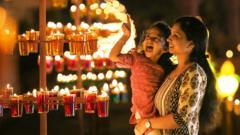
The celebration of Diwali is based on the story of Lord Rama's return to Ayodhya after his victory over Ravana, symbolizing the triumph of good over evil and knowledge over ignorance. The traditions include cleaning and decorating homes with flowers, colored lights, and oil lamps called diyas before gathering for prayer, exchanging gifts, and traditional foods and Indian sweets.
The celebration officially begins on November 6th with Dhanteras, considered a blessed event where buying gold, silver, or new items brings good luck, followed by the second day known as "Choti Diwali," which focuses on lighting oil lamps and launching fireworks in some households. The third day is the main peak, where families offer evening prayers to Goddess Lakshmi before gathering for festive atmospheres, ritualistic meals, and colorful firework launches.
The celebration of the fourth day varies across India between family gatherings and New Year celebrations in some communities, while the fifth day, known as "Bhai Dooj," is dedicated to celebrating the bond between brothers and sisters. Additionally, Sikhs and Jains celebrate this festival along with other important religious observations, where Sikhs observe "Bandi Chhor Divas" to commemorate the liberation of Guru Hargobind from prison in the 17th century, while for Jains it symbolizes achieving Moksha or liberation from the cycle of rebirth for Lord Mahavira.
Analysis & context
Analysis & Context
From an analytical perspective, this event emerges as a complex case study where deep religious traditions intersect with modern environmental challenges in India. Although Diwali is a massive spiritual occasion aiming to celebrate the victory of good over evil and knowledge over ignorance, the contradiction between celebration rituals involving fireworks and the fragile state of the environment creates a significant socio-health dilemma.
In a broader context, air pollution in northern India represents a chronic environmental challenge exacerbated by traditional agricultural practices such as burning crop residues, making major celebration periods like Diwali critical times for public health. Allowing "green" crackers represents an attempt by the state to balance preserving cultural heritage with reducing environmental damage, but their effectiveness remains subject to scientific and social debate.
Furthermore, the celebration of Diwali is not confined only to India but is practiced internationally by scattered Indian communities around the world, reflecting the strength of this festival as a cultural bridge that brings people together regardless of faith or geographical location. Considering Diwali time as an opportune time for new purchases even in financial markets shows how religious symbols intertwine with economic activity in Indian culture.