Sourced fact
The News
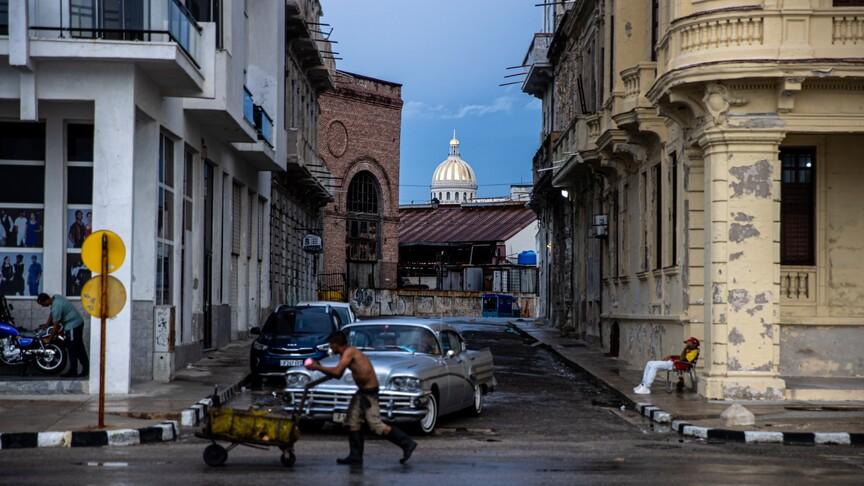
Cuban government authorities announced on Sunday that the national electrical grid has been fully restored following a widespread blackout that disrupted power supplies across the entire island. According to Anadolu Agency reports, technicians reconnected the power transmission infrastructure at 7:56 PM UTC (2356 GMT) on Saturday evening, as reported by Cuba's National Electric Company on the American social media platform X.
The utility authority noted that solar energy production via photovoltaic cells reached 985 megawatt-hours during recovery operations, a figure lower than previous days due to complex reconnection procedures. By Sunday morning, generation capacity stood at 1,160 megawatts against a demand of 2,673 megawatts, leaving a deficit affecting approximately 1,510 megawatts of consumption.
Grid operators anticipate that evening peak electricity demand will reach 3,200 megawatts while available capacity remains at only 1,160 megawatts, creating an expected deficit of 2,040 megawatts and affecting an estimated 2,070 megawatts of consumption during peak hours. The utility authority also reported continued malfunctions in boilers and units across several major thermal power plants, including Unit 8 at the Mariel Central Station, the central block at Guiteras, Unit 2 at Viñales, and Unit 3 at Renites.
Additionally, scheduled maintenance led to the shutdown of Unit 3 at Santa Cruz and Unit 5 at Neivitas and Renites facilities. Cuba has long faced instability in electricity supplies, fuel shortages, and repeated generation outages, which Havana attributes to deteriorating infrastructure and U.S. economic sanctions that limit imports of fuel, spare parts, and foreign investment.
Analysis & context
Analysis & Context
From an analytical perspective, the heavy reliance on solar energy as a temporary solution during recovery operations reveals the fragility of Cuba's electrical system, which continues to suffer from critical dependence on fossil-fuel-fired thermal plants. This situation reflects a broader reality where the island is forced to seek rapid-response energy alternatives to compensate for the massive gap between supply and demand, especially during evening peak hours when household and corporate consumption surges sharply.
In the wider context, repeated electricity outages in Cuba are not merely a technical problem but a direct reflection of the deep-seated economic crisis the country has endured for decades. Reports indicate that deteriorating outdated infrastructure and an inability to perform regular plant maintenance have significantly contributed to this crisis, making full service restoration a complex process requiring considerable time and massive investments that may not be available under current economic conditions.
Geopolitical factors also play a pivotal role in perpetuating these crises, as U.S. sanctions impose strict restrictions on importing the fuel and spare parts necessary to operate thermal power plants. This embargo limits Cuba's ability to secure the supplies needed to maintain grid stability, leaving it vulnerable to recurring disruptions that directly impact citizens' livelihoods and the country's overall economy.