Sourced fact
The News
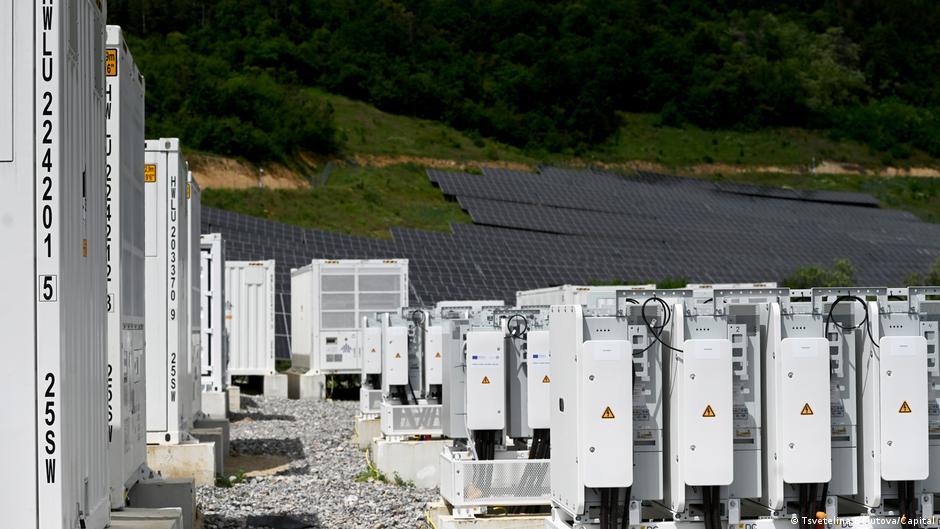
Bulgaria, located in Southeast Europe, has become a unique case study in the global energy sector, achieving battery storage ratios that surpass major markets such as Germany, China, and California. In less than two years, the country's battery storage capacity rose from zero to nearly one-quarter of its total generation capacity, driven by European funding and private capital worth around 3 billion euros.
Evailo Stanchev, editor-in-chief of the "Capital" business magazine, explained that storage capacity increased from 1.66 gigawatts in January 2026 to 5.4 gigawatts in just eight months according to data from the European Network of Transmission System Operators for Electricity. He noted that private investment reached twice the officially expected amount, totaling approximately two billion euros, while most batteries came from China and investors were from Bulgaria and Western Europe.
The country experienced a successful summer thanks to its batteries, which acted as a primary regulator for the neighboring grid and stored cheap solar energy to sell in the evening when prices rise. The state, historically a net exporter of energy, has transformed into a regional energy storage hub with operational capacity exceeding the combined capacities of Greece and Romania, exporting most of its shipments to Romania, which suffered from drought.
Stanchev stated that the average daily electricity price in Bulgaria between August 1st and the 10th was 132.2 euros per megawatt-hour, approximately 14 euros less than the price in Romania thanks to the batteries' effect in the evening hours. However, Kalyan Stoykov, chairman of the Board of Directors of the Energy Management Institute in Bulgaria, warned that these record developments must be approached with caution, as their long-term effects have not yet appeared.
Stoykov pointed out that this transformation came at the expense of traditional power plants, which previously generated higher profits during peak evening hours, thereby raising the base electricity price. He also noted that massive investment in batteries exceeds any national strategy and reduces the role of national strategic maps from leadership to a follower role.
Analysis & context
Analysis & Context
From an analytical perspective, this model represents a radical strategic shift in the European energy sector, where countries have moved from full reliance on traditional sources to adopting hybrid models heavily dependent on rapid renewable energy storage. While most lithium batteries come from China, investors are coming from Bulgaria and other European countries that see this field as a promising investment opportunity, reflecting a shift in global energy supply chain dynamics.
In the broader context, data suggests that rapid growth may come at a cost to traditional power plants, where lower prices during peak evening hours due to battery discharge force conventional generators to compensate for revenue gaps, thereby raising the base electricity price. This development also raises questions about the sustainability of the model throughout the year, especially with the possibility of market saturation and declining returns per unit as more batteries connect to the grid.
Experts indicate that investment in batteries now exceeds any long-term national strategy, where national strategic maps shift from a leading role to a follower role to rapid market variables. Meanwhile, Bulgaria continues its energy transition efforts away from coal by working on rehabilitating the massive "Chera" hydroelectric plant and plans to build two new nuclear reactors at the Kozloduy station.
Finally, experts like Kalyan Stoykov warn that this record growth must be approached with caution, as the long-term effects of this massive construction remain unclear, especially with the risks of "self-consumption" of renewable energy, which quadrupled between 2022 and 2026.