Sourced fact
The News
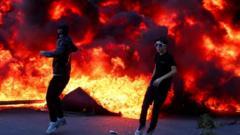
Violent protests erupted in Albania's capital Tirana, with thousands of students participating in a second round of demonstrations targeting several government buildings. The protests began on Tuesday outside the Ministry of Education, where students demanded improvements in university conditions and job opportunities. On the following day, an attack was carried out on part of the Ministry of Education building, as well as the offices of the Prime Minister, the Ministries of Finance and Interior, and neighboring companies.
Albanian Deputy Prime Minister Alba Nako Kushi stressed the need for calm and wisdom, noting that "Albania does not need destruction to change the situation." The police used force to disperse the protesters with tear gas and water cannons.
Minister of Education Merilja Kombani stated that peaceful demonstration differs from violence against public institutions, pointing out that burning institutions is not a peaceful expression of opinion. The leader of the Albanian Democratic Party, Sali Berisha, condemned the violence but praised the protesting students, saying they are "black swans Tirana has never seen before."
According to Albania's official news agency, sixteen people were arrested following the violent protests that took place on Tuesday. These protests follow months of demonstrations against the government, known as the Flamingo Revolution, demanding the resignation of Prime Minister Edi Rama. Public anger was further fueled by luxury tourist projects linked to Jared Kushner, son-in-law of US President Donald Trump, due to alleged corruption and lack of transparency in Rama's government.
Analysis & context
Analysis & Context
Analytically, these protests reflect a growing public anger in Albania against corruption and unemployment. Following months of previous demonstrations known as the Flamingo Revolution, which called for the ousting of Prime Minister Edi Rama, these events indicate that students and local residents feel deeply frustrated with the current government and are demanding fundamental changes in the political and economic systems. In a broader context, these protests highlight political and social tensions in Albania, which may lead to significant changes in the near future.