Sourced fact
The News
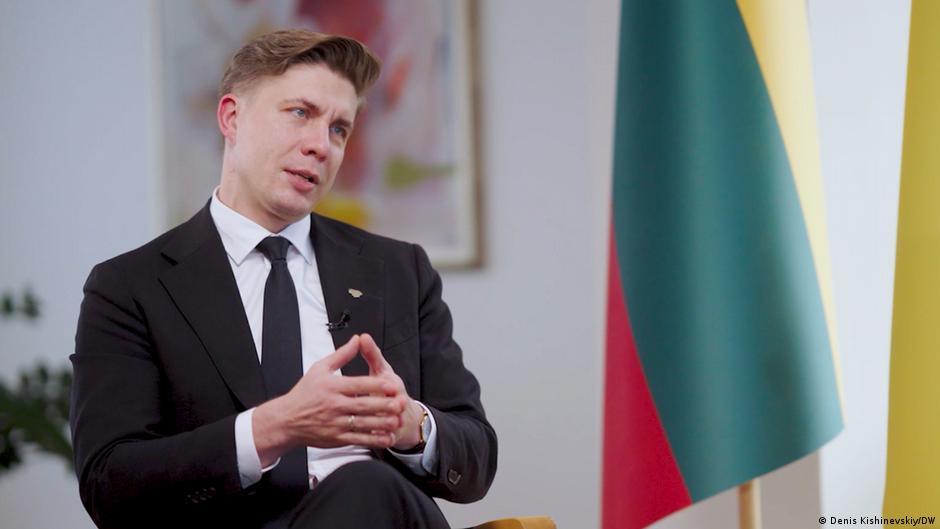
Lithuania's Prime Minister Mindaugas Sinkevičius reaffirms that the country's airspace security is a top priority following an increase in drone attacks originating from Belarus, stating that Lithuanian skies are, in fact, NATO skies. Sinkevičius noted that protecting Lithuania's airspace directly contributes to securing most other alliance air domains, making air defense an urgent necessity that transcends national borders.
The Lithuanian Prime Minister clarified that the Russian war against Ukraine is closely linked to Lithuania's national security, which has suffered a series of incidents including drone attacks, exploited migration, and weather balloons entering its territory via Belarus. He pointed out that these developments have contributed to a broader sense of insecurity across Europe, calling on allies to strengthen solidarity because NATO membership does not mean relying entirely on partners without effective individual contribution.
Sinkevičius spoke about the necessity of combining traditional military equipment with modern technologies such as drones, emphasizing that both are required for effective defense. He stated that military hardware alone cannot protect a state unless society feels secure or identifies with the state, considering that social policy and support for families of the unemployed and needy are an integral part of national security amid changing political environments due to war.
Additionally, Lithuania's Prime Minister visited Kyiv and Lutsk to meet Ukrainian leaders, expressing the country's commitment to allocating a percentage of its GDP to support Ukraine ranging between 0.25% and 0.3%. He stressed the continuation of Western support, especially from Germany, warning that weakness on the Western front could increase the risk of failure on the Eastern front where Russia fights against Ukraine.
Analysis & context
Analysis & Context
From an analytical perspective, the shift in Lithuania's Social Democratic Party towards focusing on national security poses a significant challenge to political traditions that previously emphasized social policy, education, and healthcare. The Russian war against Ukraine has imposed changes in the political environment, forcing left-wing governments in Europe to significantly raise national security as a priority on their agendas.
In a broader context, Sinkevičius rejects the idea of European countries choosing between traditional military preparations and new technologies such as drones, emphasizing the need for both together. He also points out that military equipment alone is insufficient to protect a state unless society feels secure or connected to the state, thereby linking defense policy with social policy.
The Prime Minister emphasizes the role of Western European countries, particularly Germany, in maintaining support for Ukraine, warning that weakness on the Western front could increase the risk of failure on the Eastern front where Russia fights against Ukraine. He also highlighted the importance of the cooperation framework between Northern European countries and the eight Balkan states (NB8) to enhance defense capabilities while working through regional NATO partnerships.
Finally, Sinkevičius acknowledges a certain war fatigue in Europe but urges European societies to consider the magnitude of what Ukrainians have endured, considering that continued support and assistance are necessary to prevent increasing risks for Ukraine.