Sourced fact
The News
The Port of New Orleans has filed an official lawsuit worth one US million dollars against the owner and management of the tanker that collided with a moored cruise ship in the city on Friday. Court documents confirm that the port is blaming the tanker for the incident, which caused damages exceeding one million dollars and led to the rescue of over 100 passengers from the Mississippi River.
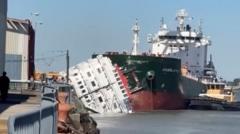
The collision between the tanker "Atlantic Asphalt" and the tourist ship "American Heritage" left the cruise vessel listing heavily on its side and nearly submerged in the river waters, while inflicting severe damage to the port itself. Although the incident resulted in 32 passengers from the cruise ship being taken to hospitals with non-critical illnesses, no passenger or crew member was missing, leading officials to describe the situation as a "miracle on the Mississippi River."
The lawsuit is filed in Eastern District Court of Louisiana on Friday against Nave Shipping SA, the owner of the tanker, and Thome Ship Management Pte Ltd, which manages it. The court requests the seizure and sale of the tanker to cover cleanup costs, inspections, and other repairs, claiming the incident resulted from negligence or fault by the ship and operating companies.
Captain Melani Bernham from the U.S. Coast Guard stated that the investigation is ongoing to determine the exact causes but pointed to indications of a loss of steering control. Company OSM Thome denied any confirmed responsibility and said it is cooperating with local authorities during the investigation, confirming that the tanker crew was safe and fully accounted for.
Analysis & context
Analysis & Context
From an analytical perspective, this incident serves as a stark reminder of the inherent dangers of navigating within busy rivers like the Mississippi, where large commercial vessel traffic intermingles with small tourist ships relying on water currents. The lawsuit illustrates that the American legal system tends to assign responsibility for maritime accidents to parties proven negligent in taking available measures to avoid risks, even when conditions are complex.
In a broader context, collisions between commercial ships and passenger vessels are not rare in the southern United States region, but they remain events with huge economic and legal impacts on ports and involved companies. These incidents highlight the crucial role of the U.S. Coast Guard in conducting immediate investigations and identifying causes such as loss of steering control or technical failures that could lead to maritime disasters.
Moreover, the involvement of Chinese companies like Nave Shipping in global shipping operations makes any accident involving them an international matter attracting media attention and regulatory interest worldwide. The responses from involved companies, such as confirming crew safety and cooperating with investigations, demonstrate the positive side of crisis management in maritime affairs even amidst the chaos resulting from collisions.