Sourced fact
The News
US First Lady Melania Trump has called for a more sustainable ceasefire in Ukraine following her hosting of Russian and Ukrainian delegations at the White House after a week-long truce in southern Kherson. Melania clarified that the lives of innocent civilians must transcend the divisions of war, expressing hope that the story of Oleshky city would inspire greater peace. This unusual occasion saw a meeting between high-ranking officials from both sides away from the official negotiation table, which has not achieved positive results since last year.
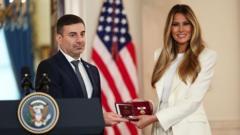
The delegations included Ukraine's High Commissioner for Human Rights Dmytro Lubinets and Russia's Human Rights Commissioner Yana Lantratova, alongside Ukrainian MP David Arakhamia and Kremlin envoy Kirill Dmitriev. Everyone praised the First Lady's role in unspecified mediation, with both Russian and Ukrainian presidents conveying their thanks to her. Melania stated she reviewed demining plans, aerial imagery, and evacuation routes during the truce, which allowed hundreds of Oleshky residents suffering from hunger and ongoing attacks to evacuate over six days.
Kirill Dmitriev praised her efforts in reuniting children separated from their families, while Arakhamia described the truce as "the largest de-escalation since 2022." He noted that the Ukrainian side asked her to continue her peacekeeping mission, acknowledging that the political path to ending the conflict remains complex. At the event's conclusion, Melania handed two handwritten letters to each delegation to deliver to their respective leaders before touring historical artifacts at the White House as symbols of peace.
However, some sources indicated that work on evacuating Oleshky continued for nearly a year before others joined later to claim credit for progress. A Ukrainian political analyst stated that Moscow agreed to the truce under American pressure, confirming Zelensky's words that Russia stops firing when Putin wants it. Conversely, a source close to US officials said the goal was to pass the ball to Trump to achieve a positive impact in the US midterm elections.
Russian attacks on the rest of Ukraine continued despite the local truce in Kherson, where missile and drone strikes killed and injured civilians this week. Zelensky stated that the success of the Oleshky truce proved fighting stops when Putin wants it, reminding that prisoners also return at the Kremlin's will.
Analysis & context
Analysis & Context
From an analytical perspective, this event highlights the complexity of the current diplomatic landscape where humanitarian efforts intermingle with American electoral political considerations. While publicly praised for her role, intelligence reports suggest the truce relied primarily on Russian President Vladimir Putin's will to temporarily halt fighting to achieve political gains.
In the broader context, Kherson remains an active front line where Russian missile and drone attacks on civilians continued despite the temporary truce. More than 40 people were killed in a single attack on a aid distribution center in Zaporizhzhia on Monday alone, highlighting ongoing humanitarian suffering outside the limited truce scope.
This situation reflects the contradiction between partial diplomatic achievements and the harsh military reality still prevailing across most of Ukraine. Additionally, the participation of both sides' diplomats at the White House suggests an attempt to leverage international atmospheres to enhance political legitimacy for humanitarian efforts, despite deep geopolitical tensions persisting.
Regarding the future, truce sustainability depends entirely on Russian political will and its ability to maintain a ceasefire without preconditions. All parties seem to recognize that real progress requires a fundamental change in Moscow's war strategy adopted since the February 2022 invasion, which caused thousands of civilian deaths and displaced millions.