Sourced fact
The News
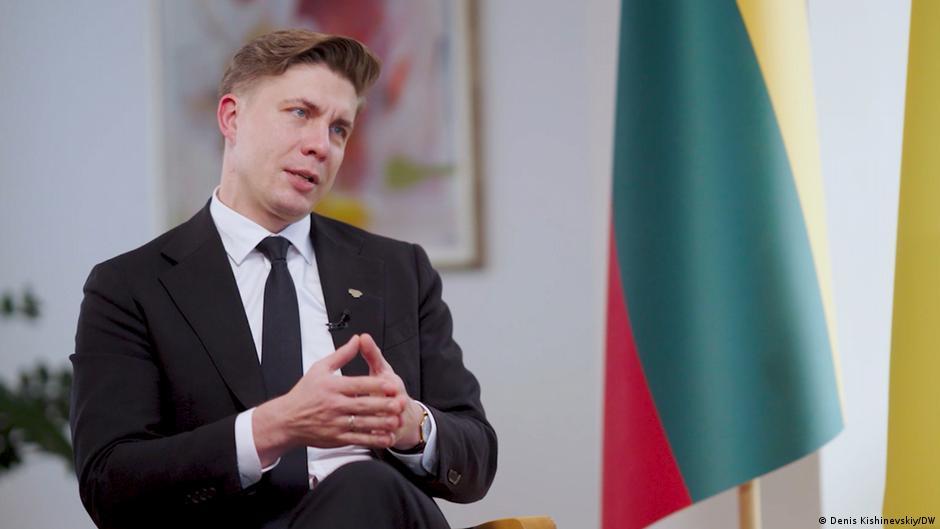
Lithuania's Prime Minister, Gintautas Pausėkas, confirms that the country's airspace security is a top priority given its strategic location on the eastern flank of NATO, bordering Russia and Belarus. In an exclusive interview with "German Wire," the Lithuanian Prime Minister emphasized that Lithuania's skies are part of the alliance's shared airspace, noting that protecting them directly contributes to securing the rest of the alliance.
Pausėkas stated that Lithuania faces a series of security threats, including drones, balloons, and deliberate displacement originating from Belarus, which has heightened public anxiety across Europe. He clarified that Lithuania's NATO membership does not mean total reliance on allies but requires each member state to strengthen its own defensive capabilities to ensure the principle of collective defense is effectively upheld.
Regarding military equipment, the Prime Minister rejected the contradiction between modern technology like drones and traditional equipment like tanks, affirming that the country needs both types simultaneously. He added that equipment alone is insufficient to protect the people without a sense of security and connection between citizens and the state, which requires social policies supporting vulnerable and affected groups.
Pausėkas also pointed to Lithuania's commitment to allocating a percentage of its GDP to support Ukraine, emphasizing the necessity of continued Western support, especially from Germany, to maintain the Western front and not weaken it. He expressed concern about war fatigue in Europe, considering that Europeans' sense of exhaustion causes the Ukrainian society to suffer even more, calling for continued aid to prevent increasing risks of failure on the Eastern front.
Analysis & context
Analysis & Context
From an analytical perspective, the shift of social democratic parties in Europe towards focusing on national defense issues represents a direct response to changes in the geopolitical environment after the Russia-Ukraine war. This transformation reflects a strategic re-evaluation of priorities where social and economic issues are no longer the sole driver of public policy; instead, national security has become a cornerstone even for governments that historically focused on social welfare, education, and healthcare.
In the broader context, Pausėkas's statements indicate that the concept of collective defense in NATO is evolving from total reliance on shared military materiel to integrating national capabilities with regional solidarity. This approach aims to build sustainable deterrence capacities that depend not only on alliance legal commitments (Article 5) but also on member states' willingness to enhance their own defenses as part of a comprehensive defense strategy.
Cooperative frameworks such as the Eight-Nordic-Baltic Group (NB8) play a vital role in enhancing security integration among Northern European and Baltic Sea countries. This cooperation aims to address shared threats, including drone attacks and irregular migration, thereby strengthening regional cohesion against increasing security challenges in Eastern Europe.
Finally, the Prime Minister underscores the critical role of Western European countries, particularly Germany, in maintaining international support for Ukraine. Any weakness in this support could lead to increased risks of military failure on the Eastern front, making continued provision of military and financial aid a strategic necessity to ensure regional stability and prevent the expansion of Russian influence.