Sourced fact
The News
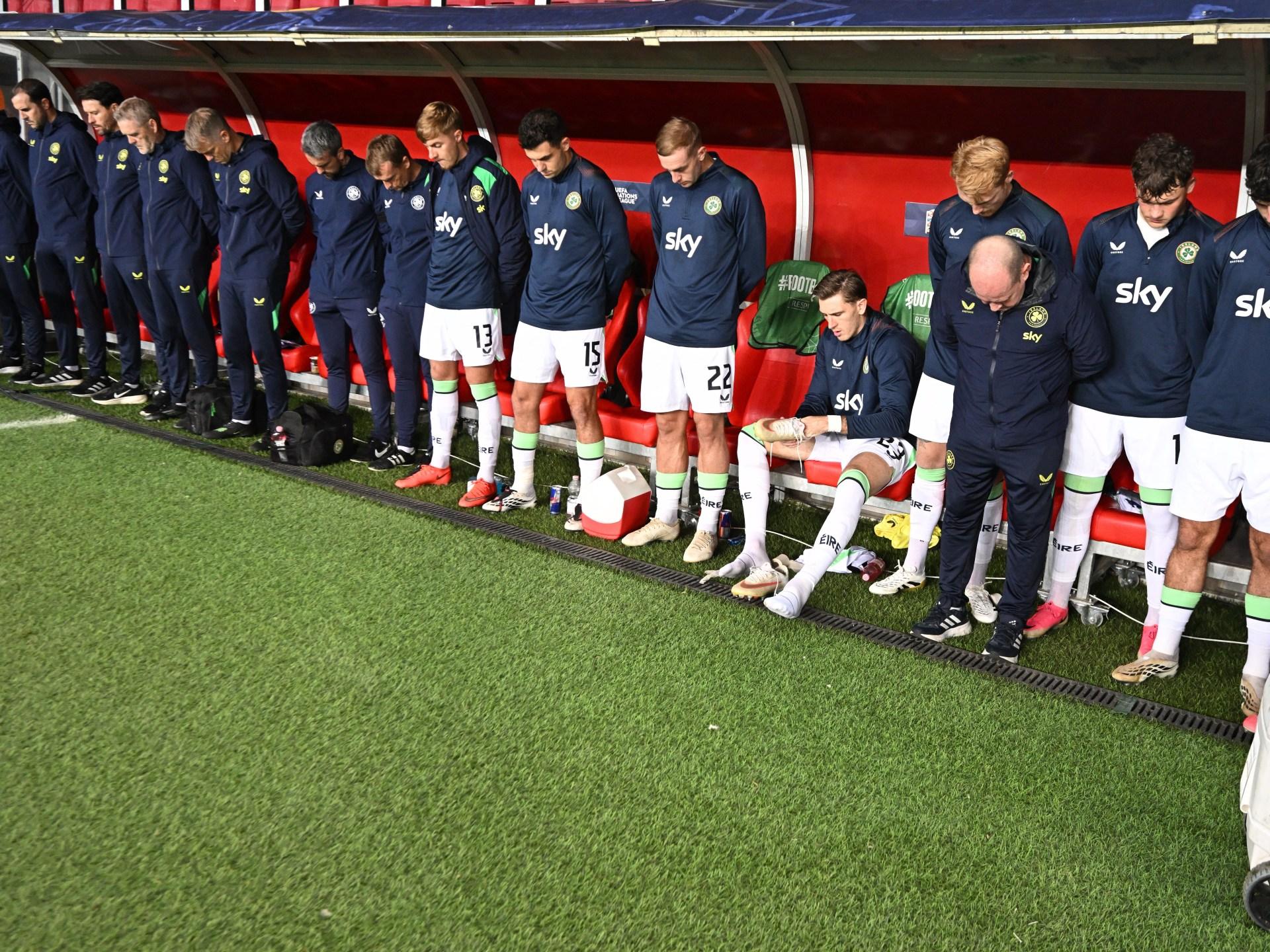
The Republic of Ireland won the first of two matches in the UEFA Nations League against Israel with a score of 3-0, following international attention on calls for a boycott of the match. Irish players played the match in Hungary on Sunday and wore black armbands in solidarity with Palestinians killed during Israel's war on Gaza. The players also bowed their heads towards the ground during the playing of the Israeli national anthem and did not shake hands with Israeli players.
David Kiloran, CEO of the Irish Football Association, stated that after hours of discussions and voting among the players, the team decided to wear the black armbands "in recognition of all the lives lost in the conflict." The Irish Football Association informed the Israeli Football Association that Irish players would not shake hands with Israeli players, and UEFA agreed to this arrangement.
Gavin Bazunu, the first-choice goalkeeper for the Irish national team, announced that he would withdraw from participating in the two upcoming matches against Israel, tweeting, "I feel it would be wrong to participate in the upcoming matches against Israel." Over 160 Irish athletes also joined the "Sport for Palestine" campaign calling on the Irish Football Association to boycott the matches against Israel.
Since May, prominent Irish football players have been participating in a campaign to have Israel expelled from UEFA and FIFA due to the Israeli team playing on occupied Palestinian territory.
Analysis & context
Analysis & Context
Analytically, this match highlights the political and sporting tensions between Ireland and Israel. Irish players' refusal to participate in the match reflects an increasing stance in Europe against Israel's aggression towards Gaza. This decision also reflects the growing influence of social and sports campaigns aimed at pressuring nations to take a stance against Israel.
In a broader context, this event sheds light on the tensions between sport and politics, where sporting federations find themselves in a difficult position between adhering to sporting values and political commitments. It also demonstrates how sport can be a tool for expressing political solidarity and support for humanitarian causes.
It is also worth noting that this match comes after a long campaign by Irish athletes calling for a boycott of the match against Israel. The campaign calls for stricter measures against Israel by international sports federations such as UEFA and FIFA, including the possibility of expelling Israel from membership.