Sourced fact
The News
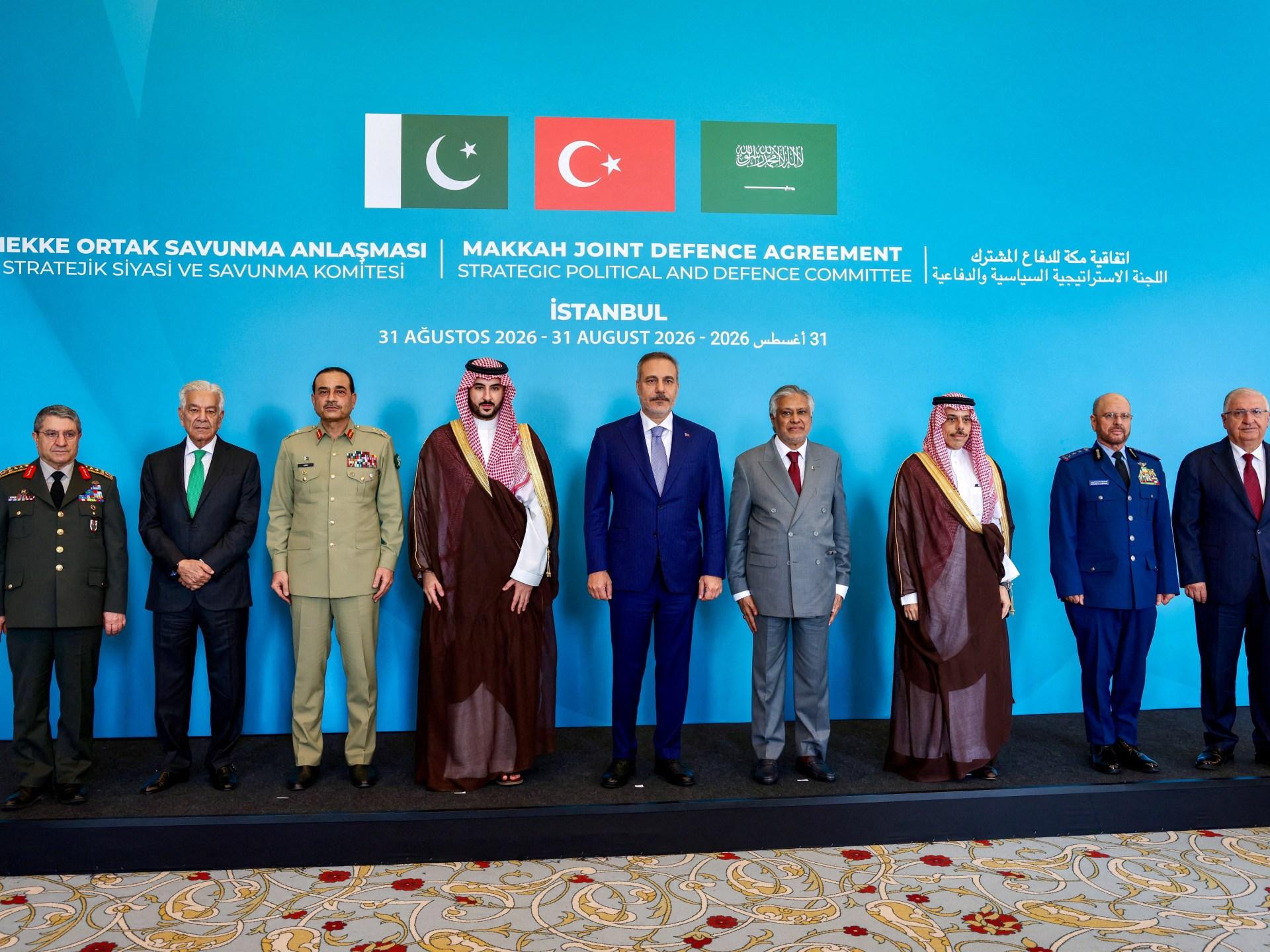
Saudi Arabia, Turkey, and Pakistan have announced plans to hold an emergency meeting of their military chiefs to discuss ways to support the Kingdom under the Joint Defense Agreement in Makkah, following a meeting of the foreign ministers of the three countries in New York on Thursday. The announcement did not specify the date of the military meeting or the forms of potential support, while the ministers reaffirmed the Kingdom's right to defend itself under Article 51 of the UN Charter.
The Saudi agency said that the meeting, which brought together Saudi Foreign Minister Prince Faisal bin Farhan Al Saud, Pakistani leader Ishak Dar, and Turkish Foreign Minister Hakan Fidan, focused on condemning attacks targeting Makkah and civilian and economic facilities in the Kingdom. This diplomatic move comes amid a new wave of rocket and drone strikes launched by Houthis against several Saudi sites, where Saudi Arabia reported that its air defenses destroyed six ballistic missiles fired toward Taif and Yanbu on Thursday.
Turki Al-Maliki, spokesperson for the military coalition, stated that any further escalation by the Houthis would be dealt with seriously and firmly, while the Saudi Civil Defense issued warnings in several areas before later announcing the removal of danger. France also offered defensive support to the Kingdom by sending military assets including soldiers, radar systems, and defense systems to protect the Yanbu site, according to President Emmanuel Macron in an interview with TF1 channel on Thursday.
In a related development, Yemen witnessed fierce clashes on several fronts that resulted in the death of at least 150 Houthi fighters and government-allied forces within 24 hours before Friday. Agence France-Presse recorded a toll of 98 killed among government forces and 52 among Houthis in battles around the Kuhob Mountains and the Lahj and Taiz regions, which overlook the Bab el-Mandeb Strait.
The Houthis strengthened their presence on the Yemeni Red Sea coast by seizing the city of Mawaka and strategic areas, threatening one of the world's most important shipping routes, through which 12 percent of global trade passes. President Abdullah Abdul-Ka'ab Al-Alimi called on the international community to intervene more, considering the Houthis' actions that exploit freedom of navigation as "holding the entire global economy hostage."
The UN High Commissioner for Refugees reported that internal displacement has increased significantly since the beginning of September with the spread of clashes across multiple fronts, where over 230,000 people have fled their homes. This displacement is distributed across several governorates including Hajjah, Taiz, Lahj, Aden, Abyan, Marib, Al-Zulfi, and Shabwah, while host communities and displacement sites face increasing pressure on food, water, clean water, and health services.
Analysis & context
Analysis & Context
From an analytical perspective, this trilateral military meeting represents a significant strategic development in the regional security equation, as the three countries seek to transform political partnerships into concrete defense mechanisms. The "Makkah Joint Defense Agreement" is the legal framework aimed at creating a collective deterrent, and the steps taken since the agreement's signing in August, such as forming strategic committees and establishing a secretariat in Saudi Arabia, demonstrate the seriousness of the parties in activating this alliance.
In the broader context, these developments are not limited to military affairs but intertwine with serious economic and humanitarian dimensions related to the safety of the Bab el-Mandeb route. Reports indicate that the Houthis have expanded their coastal presence and taken cities such as Al-Mahay, threatening one of the world's most important trade arteries passing through Yemeni territorial waters, which the Vice President of the Yemeni government described as "economic terrorism" seizing global freedom of navigation.
The report highlights the magnitude of the humanitarian disaster resulting from escalating fighting inside Yemen, where hundreds of soldiers from both sides were killed within just 24 hours, while over 230,000 people were forced to leave their homes since the beginning of September. These new figures add to the huge number of internal refugees, which stands at around 5.2 million people, placing a heavy burden on host communities and basic humanitarian services in affected governorates such as Hodeidah, Taiz, and Lahj.
Finally, France's intervention through President Macron's offer highlights the transformation of the Yemen conflict into an issue with broader international dimensions, where major powers intervene to provide direct or indirect defense support. This shift reflects global concern over the expansion of the conflict's scope and its impact on regional stability and international maritime security, especially with increasing attacks targeting critical infrastructure and economic facilities in the Kingdom of Saudi Arabia.