Sourced fact
The News
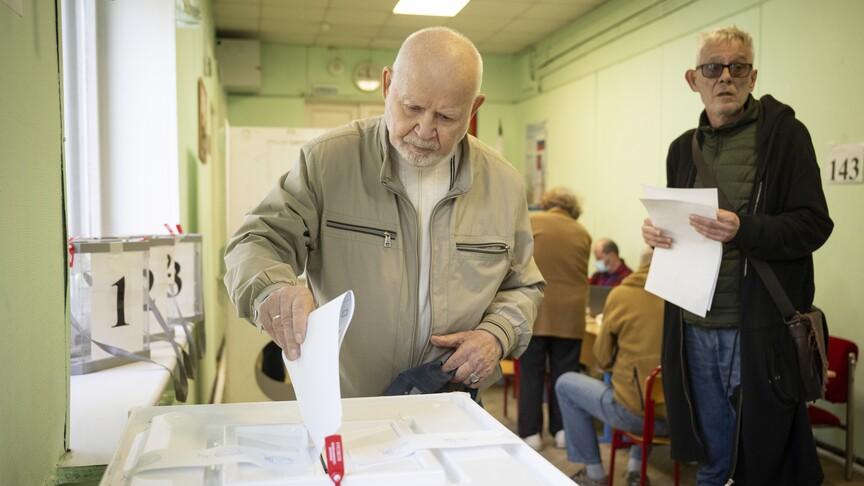
The Russian parliamentary elections in the 450-seat Duma, which lasted three days, concluded on Sunday with a provisional mandate nearing 57%, according to preliminary data from the Central Election Commission, which confirmed that voter turnout exceeded the percentage recorded in the 2021 elections.
Ilya Pamfilova, head of the election commission, noted that the election infrastructure was subjected to a massive cyberattack during the voting days, where over 100 million dangerous attempts were detected and blocked targeting the commission's websites, the electronic voting platform, and state services.
She stated that although the attacks did not succeed, their impact was significant, explaining that Russian authorities identified attempts to exploit vulnerabilities in the voting system and implemented security filters to repel these efforts, which originated from foreign sources including Ukraine, the United Kingdom, and other countries.
Pamfilova also mentioned that a representative of a political party attempted to introduce malicious software into Moscow's electronic voting system, but authorities denied the success of this sabotage and confirmed that the election process continued according to the law with high voter turnout.
Simultaneously with the elections, Moscow Mayor Sergey Sobyanin stated that Russia had repelled the largest drone attack on the capital since Saturday, intercepting more than 1,600 drones, including about 450 near Moscow, without casualties in incidents he described as unprecedented.
Sobyanin added that the attack was planned to disrupt the elections but failed, while the Russian Ministry of Defense reported that Ukrainian forces attempted a collective assault using drones and "Flamingo" missiles to disrupt the elections.
Russian defenses shot down 1,951 drones and eight long-range missiles within a 24-hour period, confirming that all missiles directed at the Moscow region were destroyed before reaching civilian facilities and that the attack did not achieve its objectives.
The region also witnessed voting in Ukrainian territories under Russian control, which Kyiv rejected and some Western governments condemned; these mark the first parliamentary elections in Russia since 2022 amidst the ongoing conflict with Ukraine.
Analysis & context
Analysis & Context
From an analytical perspective, these elections represent the first parliamentary vote in Russia since 2022 and take place amid the continuation of military conflict with Ukraine, making them a sensitive political event combining a formal democratic process with parallel cyber and air warfare. The high participation rate exceeding 57% reflects an effort by authorities to bolster the legitimacy of the electoral process under exceptional circumstances including direct security threats to the capital and industrial regions.
In the broader context, the cyberattacks targeting election infrastructure indicate a new escalation in cyber warfare between Russia, Ukraine, and other nations such as Britain, where attempts from fake Russian IP addresses and from outside the country were detected. Furthermore, interference by external parties via attacks on communication lines reflects a transformation of traditional conflict into hybrid warfare encompassing both cyberspace and airspace simultaneously.
The massive drone attack on Moscow highlights a major security challenge for the Russian capital, especially given that some drones reached critical areas such as refineries and residential buildings, despite air defenses successfully repelling the vast majority. Describing the attack as "unprecedented in scale" points to a tactical evolution in asymmetric warfare relying on large numbers of cheap drones to bypass traditional defense systems.
Finally, holding elections in Russian territories under control while Kyiv rejects this measure and Western governments criticize it underscores the geopolitical complexities of the current conflict. The continued counting and distribution of seats between party lists and individual regions reflects Russia's mixed electoral system aimed at achieving a certain balance between party representation and local representation amidst a turbulent political environment.