Sourced fact
The News
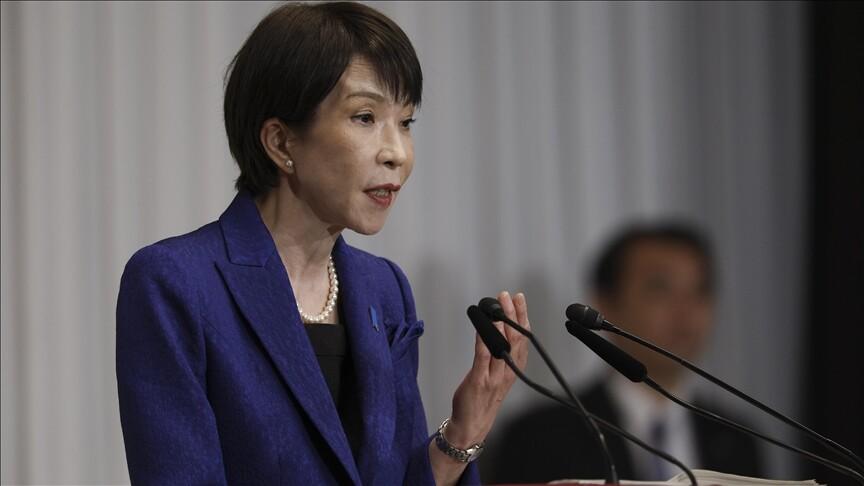
Japanese Prime Minister Sanae Takaishi has declared her commitment to continue pressuring Russia through the imposition of severe international sanctions. This announcement was made during her first official meeting with Ukrainian President Volodymyr Zelensky in New York. The statement came at the conclusion of approximately 20 minutes of talks held on the sidelines of the 86th session of the United Nations General Assembly last Tuesday.
According to Japan's Kyodo News Agency, Takaishi confirmed during her conversation with Zelensky that Japan will work to provide assistance to Ukraine and impose sanctions on Russia in close coordination with the international community. The Japanese Prime Minister added that it is absolutely essential for countries to unite in supporting Ukraine to ensure a fair and lasting peace as soon as possible, thereby reaffirming Tokyo's continued solidarity with Kyiv.
On his part, Ukrainian President Volodymyr Zelensky expressed his firm belief that peace will soon reach his country and voiced his hope for the participation of Japanese companies in Ukraine's reconstruction efforts. Zelensky also praised the effectiveness of the sanctions imposed so far, emphasizing that Ukraine will never forget the humanitarian aid and energy support provided by Japan during the war, which has now entered its fifth year.
It is worth noting that the meeting held on Tuesday was officially requested by the Ukrainian side, according to a high-level Ukrainian official. This visit comes within the framework of ongoing international efforts to unite against Russian aggression, especially as the conflict continues for years and impacts global security and the international economy.
Analysis & context
Analysis & Context
From an analytical perspective, Prime Minister Takaishi's visit to New York reflects a shift in Japanese foreign policy, adopting a more active role in Western alliances against Russia. This step confirms that Tokyo remains committed to its mediating stance with the West without direct involvement in the military conflict, yet it raises expectations through precise coordination with Kyiv.
In a broader context, Japan's support for Ukraine is not merely a humanitarian position but part of a wider strategy to reshape the security architecture in Europe and Asia. The economic sanctions imposed by Japan serve as a key tool to weaken Russia's ability to fund its war, especially amidst growing international pressure on Moscow to change its military and political behavior.
Moreover, Takaishi's visit comes at a critical time as the Russia-Ukraine conflict enters its fifth year, highlighting the importance of continued international support to prevent the expansion of the conflict or a collapse of the humanitarian situation in Ukraine. The participation of Japanese companies in reconstruction efforts is a strategic move aimed at restoring economic trust with Europe after years of geopolitical turbulence.
Finally, the coordination between Japan and Ukraine during the UN Summit underscores the vital role that international organizations play in facilitating dialogue among allied nations. This cooperation remains key to achieving regional and global stability, particularly as concerns grow over escalating tensions in other parts of the world due to ongoing major conflicts.