Sourced fact
The News
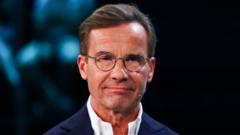
Swedish Prime Minister Ulf Kristersson has submitted his resignation following the defeat of his narrow right-wing bloc in the general elections held on Sunday to the center-left opposition. He announced this step via X late Thursday evening. The result was a surprise for the right-wing bloc, which relied on support from the Sweden Democrats (SD), an anti-immigration party; preliminary statistics showed a margin of about 50,000 votes between the two blocs in a country with a population of around 10 million. It is expected that the opposition coalition led by Magdalena Andersson of the Social Democrats will win 176 seats in the Swedish parliament, which has 349 seats, while data from the Swedish Election Office anticipates a victory for her right-wing bloc with 173 seats.
In his statement, Kristerson said that the next stage will be led by the Speaker of the Parliament after his resignation to allow immediately starting forming the new government. Meanwhile, Andersson confirmed via an Instagram video clip that the Swedish people voted for a new direction for the country. The Social Democrats party, led by Andersson, received its historic support since World War II and is now engaging in talks with other opposition parties such as the Left Party and the Center Party for a new coalition government after four years of opposition.
However, these negotiations may take a long time due to major disagreements between parties on issues such as taxes, especially since forming the government after the 2022 elections took 37 days while it took 134 days in 2018. The Sweden Democrats party, founded by Nazi sympathizers in the 1980s, has undergone a major transformation since the early 2010s to become the second-largest party in the country, but they lost their support for the first time since entering parliament in 2010 with a three percentage point drop compared to 2022.
The right-wing bloc consists of Kristersson's Moderate Party plus the Sweden Democrats and the Christian and Liberal parties, and the latter party offered external support to the current alliance that imposed significant tightening on immigration policies. Kristersson mentioned in his resignation that conditions for forming the next government are complex due to obstacles that different parties' statements before election day might create. Election committees continue to count early votes submitted late and votes coming from abroad that did not arrive before Sunday's poll closure, with final results expected this week after official confirmation of results in the coming days.
Analysis & context
Analysis & Context
Analytically, the victory of the left-wing bloc represents a return for the Social Democratic Party, which has regularly led Swedish governments since World War II and was the dominant political force throughout the last century. The tradition of forming governments in Sweden goes back to a strong custom of coalition or minority governments due to the division of the eight main parties between the right and left wings of the political scene, making the process of forming a government often take a long time, as happened in the 2018 elections which took 134 days.
In the broader context, the Sweden Democrats party is a unique political phenomenon that transformed from being a marginal founding party in the 1980s to the second-largest party in the country thanks to its focus on immigration and violent crime issues since the early 2010s. Although this party was a prerequisite for Kristersson's government to continue, losing its support opens the door to new alliances that may take a long time to form due to deep-rooted differences between left-wing parties on issues such as taxes and social policies.
This fragile political landscape in Sweden shows how demographic and social changes can reshape the political map suddenly, where the immigration issue transformed from just a point of contention into the main axis that decided election results and forced the Prime Minister to resign despite his promises to include the national Sweden party in the government.