Sourced fact
The News
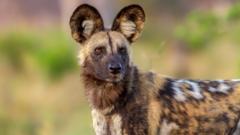
A historic journey for four African wild dogs across Zambia has come to an end, where they covered a record distance of 4,000 kilometers in search of a breeding partner, marking the longest distance ever recorded for any African land mammal. The study published in the journal "Ecology" reveals that this group of females and males successfully navigated through fragmented landscapes caused by human activity while avoiding major obstacles such as the capital city of Lusaka and industrial areas.
Professor Scott Creel from Montana State University, who has studied wild dogs since 1991, indicated that this journey offers cautious hope that all major populations of wild dogs in East and Southern Africa may be connected to each other, except for those surrounded by fences. He added that this traveling behavior differs from seasonal migration where animals search for food and shelter, as the goal of this journey is focused on finding new mates outside the pack where the animal was born.
Although three females successfully completed most of the route, one died after being trapped in an illegal snare, while two males also died in similar traps, highlighting the danger of poaching that these rare species face, with only about 6,000 individuals remaining in the wild. Researcher Bruce Ellender from "The Nature Conservancy" emphasized the need to view protected areas not as isolated islands but as part of an interconnected system, especially for species that travel long distances like dogs and elephants.
The figures show that the three siblings covered a straight-line distance of 260 miles over eight months, while the total distance traveled was nearly ten times that due to the winding nature of the route they avoided. The results confirm that wild dog populations in East and Southern Africa may be more interconnected than previously believed by conservation experts, which is crucial for the continued survival of these endangered species.
Researchers called for creating strips of natural land outside protected areas to connect fragmented regions caused by roads, cities, and farms, noting that this connection is necessary to ensure the survival of wild dogs and other animals that travel across vast areas. This study serves as evidence of wildlife's ability to traverse huge distances despite increasing pressures from humans, with a warning that illegal traps still pose an existential threat to these social groups that hunt together.
Analysis & context
Analysis & Context
From an analytical perspective, this dispersal journey represents a unique behavior that differs completely from seasonal migration undertaken by animals in search of food or suitable habitats, where individuals born in a group leave at two or three years of age to find a mate outside the group. The study shows that African wild dogs, despite their rarity with only about 6,000 individuals remaining in the wild, possess an amazing ability to navigate complex and fragmented terrain caused by human activity.
In the broader context, the importance of these results emerges in the field of environmental conservation, where evidence indicates that connecting natural habitats between protected areas is a critical factor for the survival of species that travel long distances such as wild dogs and elephants. Bruce Ellender, Head of Conservation at Kavango Zambezi (KAZA) Transfrontier Conservation Area under "The Nature Conservancy," called for establishing a strip of natural land outside protected areas to connect fragmented regions caused by roads, cities, and farms.
The study also highlights the severe challenges facing these rare species, where data indicates that some females died inside illegal hunting traps, reflecting the continued threat of poaching in the region. Experts confirm that understanding movement patterns of these animals helps in designing more effective protection strategies that recognize their wide ranges and needs for connected spaces.