Sourced fact
The News
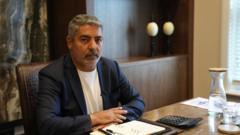
Tunisian police have detained prominent journalist Mohamed Yousef, one of President Kais Saied's most vocal critics, according to the head of the Tunisian National Union of Journalists speaking to Reuters. Yousef, who serves as editor-in-chief of the investigative news site "Al-Qitaifa," was summoned for questioning on Friday, though the investigation's focus has not yet been disclosed.
Tunisian authorities have not yet commented on this detention, which follows a series of judicial pursuits targeting media figures and activists throughout the current year. This arrest comes after several other cases: in June, an absentia conviction sentenced Khawla Bouguerra, founder of the "Tomedia" website who fled to France, to four years in prison; in May, Zied Alani, another prominent journalist, received a one-year sentence; and in January, Mourad Zeghidi and Bourahma Bsaiss were each handed three-and-a-half-year prison terms. These moves have drawn warnings from human rights organizations about the tightening grip on independent voices criticizing President Saied, who has dismantled democratic safeguards.
In a separate development, Tunisia's Court of Appeals upheld on Thursday a collective trial against 40 individuals—including opposition leaders, lawyers, and human rights defenders—charged with plotting to overthrow the president. Habiba Chabi, a lawyer whose father, Najib Chabi, was among those defendants sentenced to 12 years in prison, stated that this ruling confirms the lack of judicial independence in the country.
Analysis & context
Analysis & Context
Analytically, this series of convictions and detentions signals a fundamental shift in Tunisia's political landscape, where democratic institutions are eroding in favor of the executive branch. The dismantling of constitutional safeguards has empowered security and judicial apparatuses to pursue any voice that criticizes President Kais Saied's policies or challenges his legitimacy.
In a broader context, press freedom in Tunisia poses a significant challenge for international organizations and civil society, which monitor the shrinking space available for free expression. Absentia convictions such as that of Khawla Bouguerra demonstrate that the legal system has become an instrument of repression rather than a guarantor of fundamental rights and freedoms.
Moreover, the collective trial upheld by the high court against 40 individuals reflects the state's strategy of marginalizing and purging the opposition through judicial means under security and political pretexts. This trend reinforces distrust in judicial independence and raises concerns about Tunisia's democratic future.
Finally, Justice Minister Leila Jafal's assertion that the defendants sought to destabilize the country illustrates how security rhetoric is used to justify repressive measures against activists. This approach entrenches an environment of fear and surveillance that hinders the development of civil society in Tunisia.