Sourced fact
The News
The "Correct the Map" project, sponsored by Togo at the United Nations, achieved significant success after 164 countries voted in favor of using map projections that reflect the true sizes of continents instead of the old Mercator projection. The General Assembly approved this decision in New York at the beginning of September, which Togolese Foreign Minister Robert Dossie considered a source of pride for the African continent that led the campaign.
Dossie explained that the project is supported by the African Union, noting that Africa is finally struggling to restore its fair place in the UN community after the space allocated to it was unfair and did not match its historical, geographical, and economic reality. He also highlighted that the discussion around global maps relates to redrawing maps of facts, knowledge, and identity to correct misconceptions about political, economic, and power realities.
In contrast, the United States was the only country to reject this decision at the UN, where President Donald Trump made symbolic statements and behaviors involving renaming places on maps such as the Gulf of Mexico and Lake Ontario. French historian Roman Teike sees this decision as part of a broader global trend that began in the late 2010s centered around decolonizing knowledge in universities, cultural institutions, and social movements.
In a related context, the Malian government decided in October 2025 to remove French history from school curricula to focus on Malian history and ancient kingdoms in West Africa, representing a decisive break with previous colonial power, which ended military cooperation with France in 2022. Vilémon Motoui from the University of Dar es Salaam in Tanzania said this decision is important for strengthening nationalism and national identity, considering that a country that does not understand its history deprives itself of clear leadership and the right direction.
Motoui added that many African countries such as Ghana, Namibia, South Africa, and Kenya have adopted a similar approach, while Tanzania recently changed its curriculum to make Tanzanian history and ethics a mandatory subject taught in Swahili. However, the historian warned against erasing knowledge of important global events like the French Revolution, emphasizing that this can be studied at a later stage to maintain a comprehensive understanding of world history.
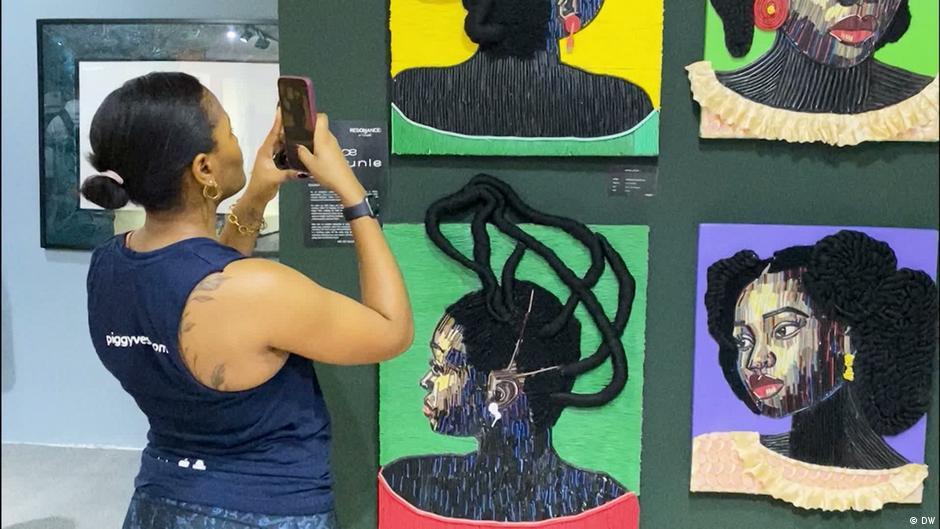
The non-profit organization "Africa Without Filter" is also working to change harmful stereotypes about Africa through its "#NoWait" campaign, which aims to highlight positive developments and political programs within the continent. François Bouda, the person in charge of arts and culture at the organization, said that media still depicts Africa as a poor, corrupt, and crisis-prone continent, calling for this perspective to change from within because there are many positive things happening on the ground.
The campaign emphasized that millions of ordinary people perform extraordinary deeds daily in the 54 countries comprising the continent, considering these actors do not wait for an external hand to define their path but strive to draw a positive image of Africa as a dynamic continent. The initiative aims to encourage people to share their personal stories that have not been recorded or edited by international institutions or global media, thereby enhancing intellectual independence and African documentation of history from an African perspective.
Analysis & context
Analysis & Context
From an analytical perspective, this decision represents part of a broader global trend that began in the late 1990s and early 2000s around decolonizing knowledge in universities, cultural institutions, and social movements. It also indicates a fundamental shift in how the world is classified and the understanding of powerful dynamics resulting from certain locations, where cartography falls within this broader context of redefining global identity.
In the wider context, many African countries are seeking to liberate education systems from colonial influence for political and historical reasons, such as the Malian government's decision in October 2025 to remove French history from curricula and focus on Malian history and ancient kingdoms in West Africa. This step contributed to strengthening nationalism and building a stronger national identity, as other countries like Ghana, Namibia, South Africa, and Kenya adopted a similar approach.
The non-profit organization "Africa Without Filter" is also challenging harmful narratives about Africa through the #NoWait campaign, which aims to change how people view the continent and highlight positive developments and initiatives instead of focusing only on crises. François Bouda emphasizes that changing the perspective requires an internal transformation among Africans themselves to stop adopting an image of the continent as unable to care for itself.