The News
The Polish Ministry of Defense stated that it has raised the level of readiness for its air defense following reports of repeated breaches of Polish airspace by Russian aircraft in recent weeks. Prime Minister Donald Tusk announced that the situation requires mental preparedness to deal with a potential scenario involving a large-scale Russian attack on NATO countries over the coming months.
Defense Minister Włodzimierz Czarnecki clarified via social media platforms that a decision was made to expand protection of Polish airspace thanks to increased activity by air forces including F-16 fighter jets and helicopters. The Armed Forces Command in Poland also stated that a MiG-8 helicopter entered Polish airspace from Kaliningrad for 42 seconds on September 23, confirming that Moscow is once again testing the readiness of Polish air defense.
Prime Minister Tusk said intelligence information indicates that the Russian plan involves a hybrid attack using drones and missiles against countries supporting Ukraine, including Poland. He added that the goal of these breaches is to weaken the motivation of alliance countries to enforce their rules in case any member state suffers an attack, while the Kremlin denied accusations directed at it regarding targeting NATO countries.
In another context, reports stated that Russian reconnaissance aircraft of the Sukhoi-24 type breached Baltic Sea airspace in February 2025, which Moscow later acknowledged. Additionally, two drones suspected to be Russian were shot down, once in Moldova and once in Romania last week, raising concerns about a direct attack on alliance territory.
On its part, the Russian Ministry of Defense announced on September 19 that its forces seized an area of over 5,300 square kilometers and more than 220 settlements in the Ukrainian Donetsk region since the beginning of 2026. However, the War Institute indicated that these claims are greatly exaggerated, estimating Russia's net losses at only 147.7 square kilometers versus Ukraine liberating an area of 972.56 square kilometers over eight months of the same year.
Ukrainian President Volodymyr Zelenskyy, speaking before the United Nations General Assembly, said that since the beginning of the year, Russia has launched more than 2,100 missiles and 63,000 drones against Ukraine. He also pointed out that artificial intelligence may soon begin making decisions on the battlefield instead of humans, calling for caution before moving to the next stage of the war.
Regarding the Russian parliamentary elections, in which United Russia led by Vladimir Putin won an increased number of seats in the Duma to 355 seats, Foreign Minister Sergey Lavrov described the result as confirmation of everyone's commitment to the President's international path and foreign policy. However, Ukraine exploited the last day of the elections to launch its largest joint air attack during the war, where Russian aircraft destroyed more than 1,600 Ukrainian drones, including waves that struck oil refineries in Moscow, Samara, and Bashkortostan.
Analysis & Context
From an analytical perspective, the increasing alleged raids on Polish and Romanian airspace reflect a dangerous escalation in Russia's strategy seeking to test NATO responses and reduce their motivation for military intervention. These incidents are not isolated but are part of a broader pattern of hybrid attacks involving drones and missiles aimed at weakening the political will of alliance member states.
In the wider context, Western intelligence reports indicate that Russia plans attacks that could be fake operations or large-scale influence interventions within coming months rather than years. This development raises major concerns about the local conflict between Russia and Ukraine transforming into a wider regional war involving neighboring NATO countries, placing the region in a state of high fragility.
On the ground front, Russian claims of holding vast areas in Donetsk contradict War Institute estimates indicating that Russian progress is very limited compared to losses and territories liberated by Ukraine. This gap between the official Russian narrative and field reality highlights Russian military weakness and increasing pressure on its logistical supply lines.
The News
While Poland experiences air tensions, Russia continues exaggerated claims about its progress in Donetsk, where the Russian Ministry of Defense claimed to have occupied 5,300 square kilometers and more than 220 settlements since the beginning of 2026. However, War Institute estimates indicate that Russia's net progress does not exceed only 147.7 square kilometers during the first eight months of the same year, its worst performance in the war so far.
Regarding Russian parliamentary elections, United Russia led by Vladimir Putin won a major victory in Duma elections, raising its share of seats to 355 out of 450. Russian authorities considered this result a referendum on the war path defined by the Russian leadership, while Ukraine launched its largest joint air attack during Russian parliamentary elections.
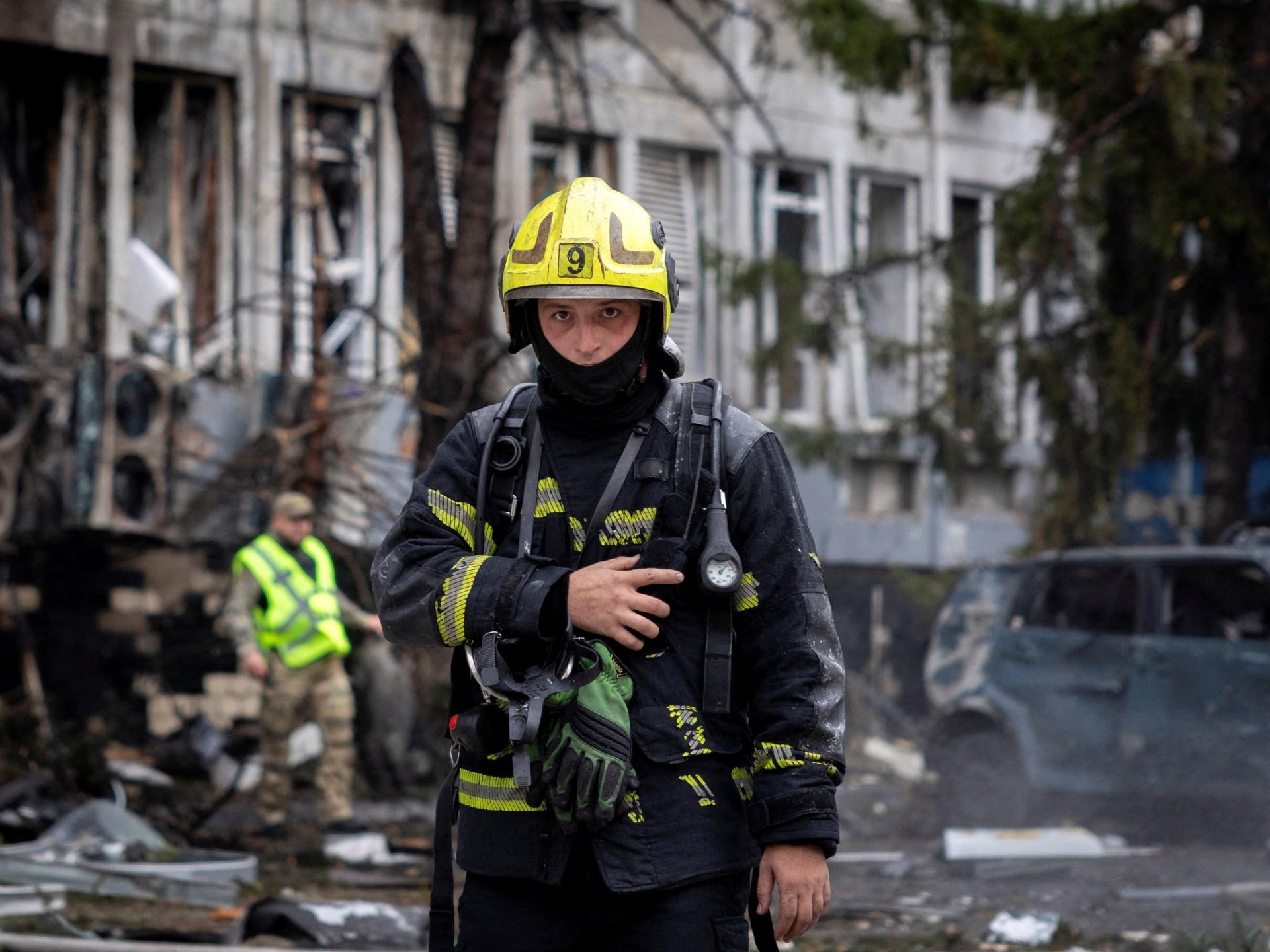
Russia also conducted night missile and drone strikes against Ukrainian cities, resulting in at least eight deaths and dozens of injuries, including a nun in a monastery in Kherson. In response, Ukraine targeted major Russian oil refineries such as the Kuybyshev refinery in Samara and the Bashneft refinery in Bashkortostan, reflecting the continuation of economic and air warfare between the two countries.
Analysis & Context
The victory of United Russia in parliamentary elections is interpreted by the Kremlin as confirmation of the Russian people's commitment to President Putin's path and foreign policies, while other observers see it as evidence of the isolation of the Russian system within its own country. These elections come at a time when human suffering in Ukraine is intensifying and missile attacks targeting critical infrastructure are becoming more severe.
On the other hand, Ukraine's continued launching of wide-scale air attacks on Russian targets aims to slow enemy progress before moving to the next stage of the war. Ukrainian President Volodymyr Zelenskyy indicated that artificial intelligence may soon begin making field decisions instead of humans, indicating a radical transformation in the nature of modern warfare and adoption of advanced technologies in battlefields.
Finally, the large gap between Moscow's claims about the size of military progress and the field reality documented by open sources reflects Russian performance weakness and increasing difficulty in achieving its strategic objectives in Donetsk and eastern Ukraine.