Sourced fact
The News
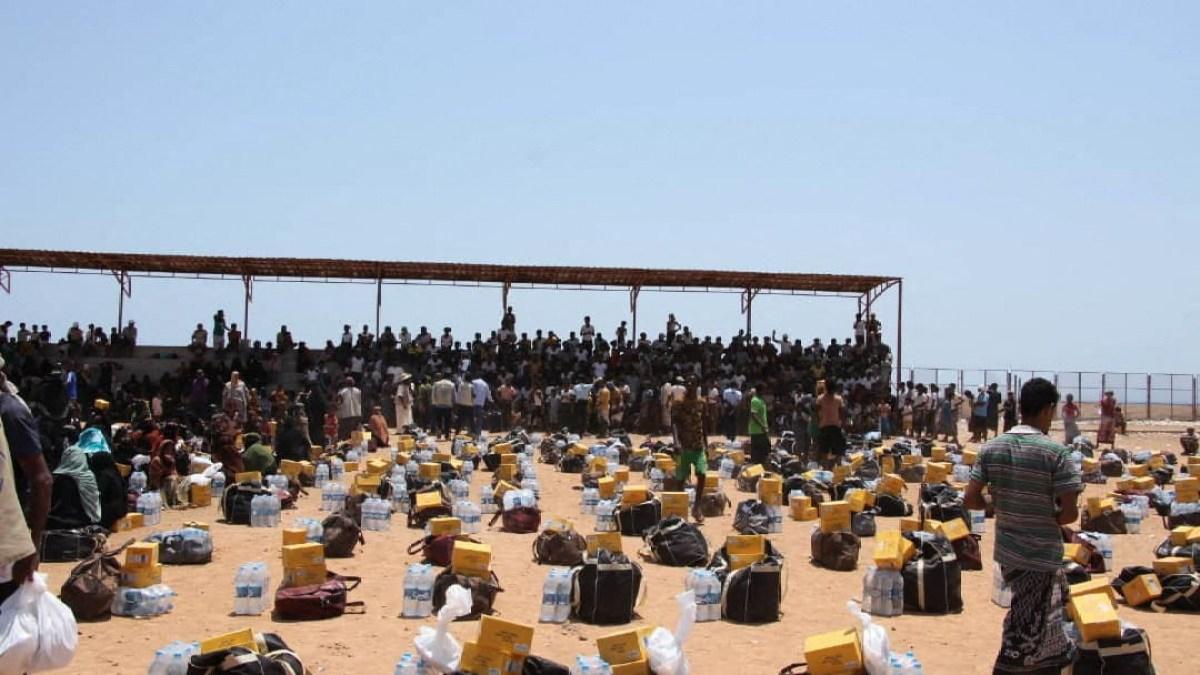
The United Nations High Commissioner for Refugees (UNHCR) has warned that the number of civilians fleeing Yemen by sea across the Red Sea to Djibouti could reach 10,000 people due to the escalation of fighting in the country, while anticipating a sharp increase in internal displacement affecting more than 230,000 individuals. This warning follows last month's dramatic offensive in which Houthi forces linked to Iran seized control of Yemen's Red Sea coast, an attack that claimed hundreds of lives on both sides and raised concerns regarding global trade and energy prices.
Babar Balouch, spokesperson for the UNHCR, told journalists in Geneva on Tuesday that escalating conflict in Yemen could trigger further mass displacement of refugees. Government media outlets in Djibouti reported that over 3,000 people crossed into the country via the Red Sea over just a few days last month. The agency confirmed it is preparing for a significant rise in these numbers, particularly after mid-October when difficult sea conditions are expected to improve.
Balouch clarified that the agency and its partners plan to receive more than 10,000 arrivals in Djibouti over the coming months. He noted that the number of internally displaced persons (IDPs) within Yemen could rise from the current figure of over 130,000. This increase occurs despite the fact that over 5.2 million people were already internally displaced before hostilities resumed, deepening the humanitarian crisis in a nation where approximately 22 million people require humanitarian assistance.
The spokesperson also warned of a severe funding shortfall hindering emergency response efforts. Currently, the UN operation in Yemen is running at only 18 percent of its allocated 2026 budget. The agency estimates an urgent need for $25 million to provide immediate aid to approximately 231,000 people. Meanwhile, Djibouti's operations face a 15 percent funding deficit while seeking $13.5 million in assistance to ensure arrivals receive essential registration, reception, and protection services.
Analysis & context
Analysis & Context
From an analytical perspective, this new military escalation represents a critical turning point in Yemen's humanitarian file, which has suffered from compounded crises over many years. The Houthis' control of the Red Sea coast was not merely a tactical military shift but opened the door to an unprecedented humanitarian influx that is reshaping the region's demographic map and straining neighboring countries' absorption capacities.
In the broader context, UN figures indicate that Yemen exists in a state of extreme fragility, with more than half its population relying on daily food and pharmaceutical aid. Any new military escalation not only threatens regional stability but also imperils global food security, given Yemen's strategic location as a vital trade corridor connecting multiple continents and directly impacting global supply chains.
Furthermore, the funding shortfall mentioned by the spokesperson poses an existential challenge for humanitarian organizations, whose operations in conflict zones heavily depend on international donations that are influenced by global geopolitical and economic conditions. Failure to meet urgent financial needs could lead to a rapid transformation from an emergency situation into a large-scale humanitarian disaster that would be difficult to address later.
Finally, Djibouti's decision to accept large numbers of refugees reflects its strategic role as a primary host nation in the Horn of Africa, but it also places a heavy burden on its limited resources and raises questions about the sustainability of this role amidst the continued influx of displaced persons from neighboring conflict zones.