Sourced fact
The News
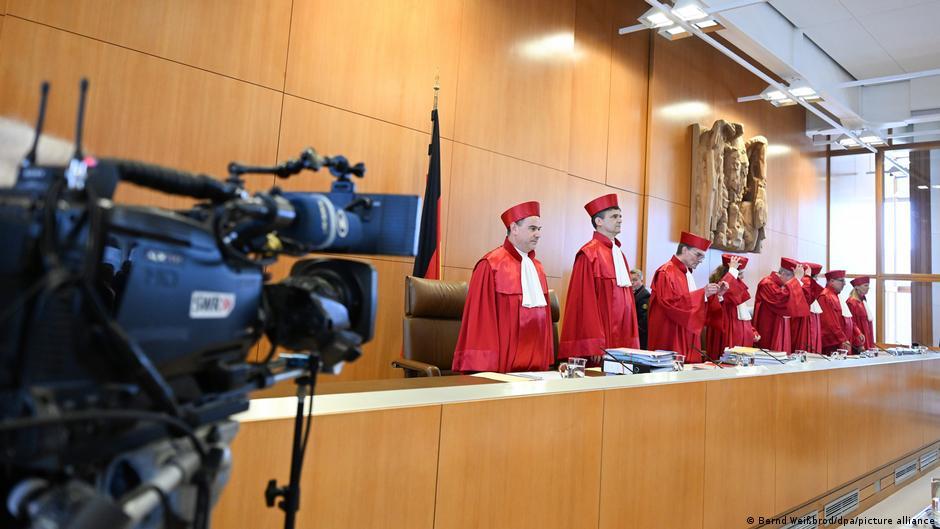
Public trust in Germany's Federal Constitutional Court, the country's highest court, has declined according to recent opinion polls. A new survey by YouGov reveals that around two-thirds of Germans (66%) trust the court, a figure lower than the level of trust it enjoyed a few years ago, when 81% expressed trust in 2021, according to the Allensbach Institute.
Some analysts believe this decline in trust may be due to court decisions that allowed the government to ban certain freedoms during the COVID-19 pandemic, sparking protests across the country. Professor Kristin Lunzfreid, a former political science professor at the University of Hamburg, noted that the court always deals with political questions but in a legal, not purely political, manner. She pointed out that the court always aims for majority decisions or consensus decisions, making it an institution rather than just individual judges.
The court also faces challenges in judge selection, where former Federal Constitutional Court judge Gertrode Lohh-Folff notes that the judge selection process no longer reflects Germany's political diversity. Lohh-Folff suggested that court positions be advertised like any other job, allowing anyone to apply instead of being appointed by political parties.
Lohh-Folff argues that allowing different political parties, including the far-right Alternative for Germany (AfD), to nominate judges to the Constitutional Court could enhance diversity and public acceptance of decisions. However, she notes that there are sufficient safeguards in the appointment process to ensure that no candidate contradicts the constitution. She pointed out that some German states have already allowed the appointment of judges from the AfD in local constitutional courts.
Analysis & context
Analysis & Context
From an analytical perspective, these results indicate that the German Federal Constitutional Court, established in 1951 after World War II, faces challenges in maintaining its status as an independent arbiter of the constitution. Professor Kristin Lunzfreid sees the court fulfilling its role in making political decisions based on legal foundations, rather than political debate.
In a broader context, some experts see the problem as lying in the court's composition itself, where judges are appointed by the main political parties in parliament. This may lead to a decrease in trust in the court's independence.
It is worth noting that the German Constitutional Court differs from the U.S. Supreme Court in that it produces consensus decisions, whereas in the U.S., each judge can write their own opinion. This reflects the German court's role as an institution rather than known individuals.
Ultimately, Gertrode Lohh-Folff sees reforming the judge appointment system as a way to bolster trust in the court, such as allowing different political parties, including far-right parties like AfD, to nominate candidates.