Sourced fact
The News
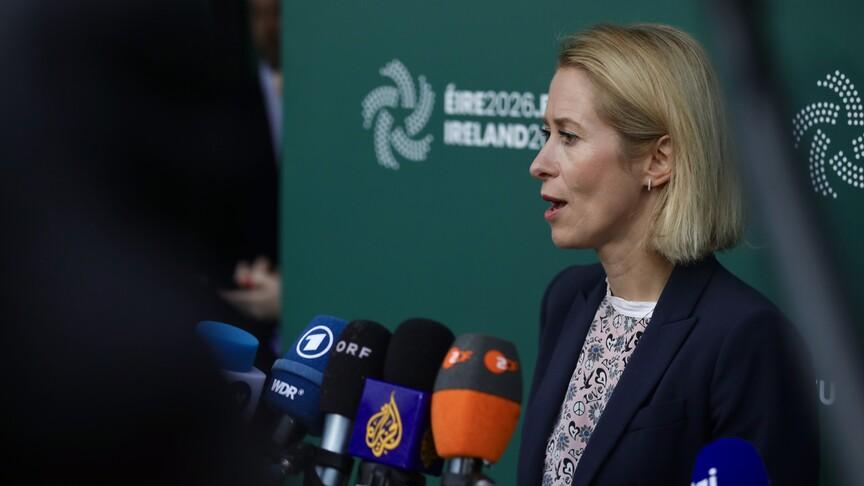
Kaja Kallas, the EU High Representative for Foreign Affairs, today called for the protection of the International Criminal Court (ICC), which is currently facing "enormous pressure," in a warning that these pressures raise questions about adherence to the international legal order. Speaking at a side event of the United Nations on humanitarian diplomacy and international humanitarian law, Kallas stated that the ICC represents "the world's promise" that victims of the most serious international crimes will never be forgotten, especially when accountability becomes politically uncomfortable.
Kallas clarified that the pressures faced by the Court and its judges concern not only the institution itself but also touch the core of commitment to international law established after World War II. She emphasized that "when impunity spreads, it breeds more impunity," warning that selective application of the law threatens the collapse of the entire system.
Kallas stated that the European Union defends existing mechanisms to strengthen international human rights law, including national and international courts such as the International Court of Justice and the International Criminal Court. She also pointed to historical and contemporary examples of these mechanisms, including the Nuremberg and Tokyo tribunals, the ad hoc tribunals for the former Yugoslavia and Rwanda, and the Extraordinary Chambers in the Courts of Cambodia (implied context) or specifically the Special Tribunal for the Crime of Aggression against Ukraine as mentioned.
In the context of current efforts, she highlighted the European Union's initiatives to document alleged war crimes in Syria and the United Nations-led investigation in Afghanistan. She stressed that preserving evidence of potential crimes in Gaza is critical during rubble clearance efforts, emphasizing that accountability must be comprehensive and non-selective whether in Syria, Afghanistan, Gaza, or any other conflict zone.
Analysis & context
Analysis & Context
From an analytical perspective, Kallas's statements reflect growing Western concern over the erosion of international rule of law in the face of escalating geopolitical pressures. Linking the protection of the ICC to the post-World War II legal system underscores that judicial independence at the international level has become a major challenge amid rising regional and international tensions.
In a broader context, Kallas's words on "impunity" point to real fears that international courts may become politicized tools subject to manipulation rather than neutral institutions. This shift threatens the credibility of the international system and leaves victims in regions such as Gaza and Afghanistan more vulnerable to rights violations without effective means for justice.
The focus on documenting evidence in Syria and Gaza also highlights a significant practical challenge, where international teams race against advancing military operations to document crimes before evidence is destroyed by destruction. The success of these efforts depends on international cooperation and policies that ensure non-selective application of the law regardless of geographic location or political alliances.
Finally, the call to create new legal mechanisms when existing ones fail indicates an ongoing need to develop tools for international justice. This evolution requires a delicate balance between respecting national sovereignty and the necessity of holding perpetrators of international crimes accountable to prevent future atrocities.