Sourced fact
The News
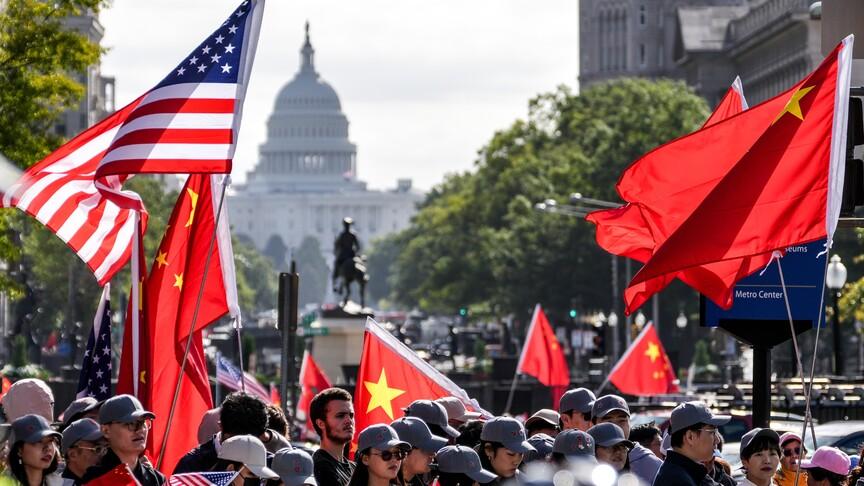
China and the United States have reached a collective agreement on imposing preferential tariffs worth $30 billion on non-sensitive goods in both directions, following President Xi Jinping's visit to Washington, which he completed with his wife. This announcement came from the White House late Friday night as part of efforts to enhance strategic stability and build relationships based on respect, justice, and reciprocity.
US President Donald Trump emphasized the need to increase the production of refined oil products to help stabilize global supplies, while a working group was launched to address barriers to market access in the agricultural sector. US exports to China include agricultural products, fish, timber, cosmetics, and medical devices, while imports from China include small electrical appliances, toys, party supplies, and child car seats.
The White House stated that China will import at least 10 million tons of American coal in 2027 and 2028. An investment council was also established to discuss investment opportunities and obstacles and provide an organized channel for addressing important trade issues. Both sides continued working on US concerns regarding shortages in supply chains related to rare metals and other critical materials, aiming to ensure shipment levels return to appropriate levels.
World leaders discussed issues including Russia, North Korea, and Iran, agreeing that Iran cannot possess a nuclear weapon and that no country or entity should be allowed to impose tariffs on international waterways. They also reminded that the two countries were allies in World War II and fought side by side to win the war, and Trump called for trilateral talks between the US, Russia, and China on arms control.
They agreed to use the term "superintelligence" instead of "artificial intelligence" for emerging related technologies and established a US-China superintelligence dialogue to discuss expected risks and benefits by November 2026. They also agreed to establish a bilateral channel to handle incidents related to artificial intelligence, while work continued on ensuring that shipment levels of rare metals and other critical materials return to appropriate levels according to a White House statement issued by Anadolu Agency.
Analysis & context
Analysis & Context
From an analytical perspective, this agreement represents a major shift in the dynamics of economic relations between the world's two largest powers, aiming to ease previous trade tensions by focusing on critical supply chains such as rare earth metals. The establishment of the new investment council reflects Washington and Beijing's desire to transform commercial competition into organized investment partnerships that reduce the risk of future conflicts.
In the broader context, discussions regarding Iran, North Korea, and Russia indicate the continued importance of major geopolitical issues on the summit agenda, where it was once again emphasized that Iran's inability to possess a nuclear weapon is a red line that cannot be crossed. Furthermore, the call for trilateral talks between America, Russia, and China on an arms race highlights the need for a new security framework that takes into account changes in global power balances.
The agreement on China importing American coal is a practical step to enhance direct economic cooperation, especially given global climate challenges that require greater coordination in energy policies. Additionally, the focus on removing barriers to market access in agriculture points to an attempt to stabilize global food prices and reduce the impact of trade conflicts on the food security of importing countries.
Finally, the change in technical terminology from "artificial intelligence" to "superintelligence" reflects an evolution in scientific and political discourse between the two countries, as both sides seek to establish joint regulatory frameworks to face new ethical and technological challenges.