Sourced fact
The News
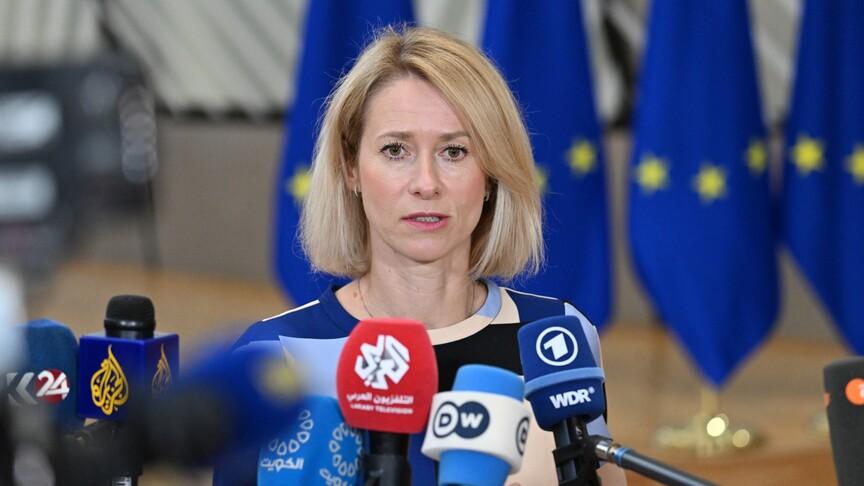
On Monday, Josep Borrell, the High Representative of the European Union for Foreign Affairs and Security Policy, announced that the EU is aiming to develop an immediate security protocol that integrates with NATO mechanisms rather than duplicating them, in response to ongoing efforts to address attacks in what is known as the "gray zone." Following a press conference after the EU's Defense Ministers' meeting in Brussels, Borrell explained that EU member states have discussed the initial points for developing an emergency security protocol, which aims to coordinate responses to attacks that fall under Article Five of the NATO treaty's red line.
Borrell highlighted that the EU's emergency security protocol differs from NATO's Article Four, which is limited to consultations, whereas the European protocol aims to outline practical steps to be taken in the event of hybrid attacks that do not reach the level of armed aggression. She also noted that she has discussed this issue with NATO Secretary-General Jens Stoltenberg, emphasizing the need to work "hand in hand" with the alliance.
Regarding Ukraine, Borrell announced that EU member states agreed to distribute €6.6 billion ($7.4 billion) from the EU Peace Facility, with a primary focus on aircraft defenses for Kyiv. However, she pointed out that the meeting did not result in new commitments regarding air defense systems. Member states also approved the first steps in reviewing the critical military aid strategy for Ukraine, including extending the mission for an additional two years.
On another note, Borrell indicated that the attacks and advances by the Houthi militias have increased risks to shipping routes in the Red Sea, noting that the EU's "Atalanta" mission has contributed to maintaining maritime routes in the Red Sea. However, she stressed that the mission needs additional resources to become more effective, as two EU member states have proposed providing additional ships, but she also highlighted the need for ships with appropriate capabilities.
Analysis & context
Analysis & Context
From an analytical perspective, the EU aims to enhance its security capabilities and respond to modern threats such as gray zone attacks that fall under NATO's Article Five threshold. Gray zone attacks are non-traditional attacks that use non-military methods such as propaganda and espionage to destabilize countries. In a broader context, European nations are striving to enhance security and defense cooperation between the EU and NATO, while maintaining the EU's independence in this field. At the same time, Ukraine faces significant security challenges, with the EU focusing on bolstering its defensive capabilities and training its military forces.