Sourced fact
The News
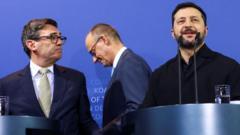
European leaders have announced that their continent is fully prepared to begin negotiations with Russia aimed at ending the war in Ukraine, within a framework of strong support for Kyiv's position. British Prime Minister Andrew Burnham stated that Europe holds a clear and coherent negotiating position, while German Chancellor Friedrich Merz emphasized that Moscow's demands, which he described as "extreme," are unrealistic.
The leaders were speaking during a summit held in Berlin to gather Ukraine's allies under the name "Will Alliance," where delegations led by President Donald Trump of the United States were present. Jared Kushner, the president's son-in-law, stated that Trump wants to strike a deal with Russia with Europe standing beside him, while Vladimir Putin has so far rejected any European role in peace talks led by the United States.
In a press conference following historic trilateral talks in Shanghai with Chinese President Xi Jinping and Putin, Putin clarified that the US continues to ask Russia to allow Europeans to participate, but he added that Moscow wants to clarify "what Europe will offer" for these talks. Putin further stated that Russia does not oppose the idea but invites Europeans to come to Moscow to define their positions before determining the format of dialogue with Ukraine.
Jared Kushner expressed optimism that Russians are ready to trust US envoys that Europe must be at the negotiating table, and that Moscow has become "comfortable" with the idea of security guarantees for Ukraine similar to Article 5 of NATO. However, Ukrainian President Volodymyr Zelensky and European leaders were not equally optimistic; Zelensky clarified that Putin has rejected all proposals so far, saying he "always says no."
Analysis & context
Analysis & Context
From an analytical perspective, this announcement represents a sensitive diplomatic shift as the West attempts to unify its stance against Moscow, especially with Russia continuing to strike energy infrastructure in Kyiv and increasing the number of civilian casualties. Furthermore, discussions about security guarantees similar to NATO's Article 5 spark significant debate because Russia has never accepted the idea of Ukraine joining the alliance, although theoretical guarantees could be offered without actual membership.
In a broader context, the contradictory statements from the Kremlin indicate diplomatic complexity; while Jared Kushner appeared certain that Europe would soon have a seat at the table, Kremlin aide Yuri Ushakov said much must still be done before expanding the format of talks. This contradiction reflects uncertainty about whether Moscow is serious about peace, especially given its continued strikes on the Crimean bridge and threats of "more painful" retaliations.
Historically, Russia's full-scale invasion of Ukraine began in February 2022. Despite several rounds of negotiations last year, Kremlin rhetoric and actions do not suggest a reduction in the war's scale. Moreover, Russia's continued insistence on sovereignty over its Ukrainian territories makes any future peace agreement extremely difficult without a fundamental resolution to these demands.