Sourced fact
The News
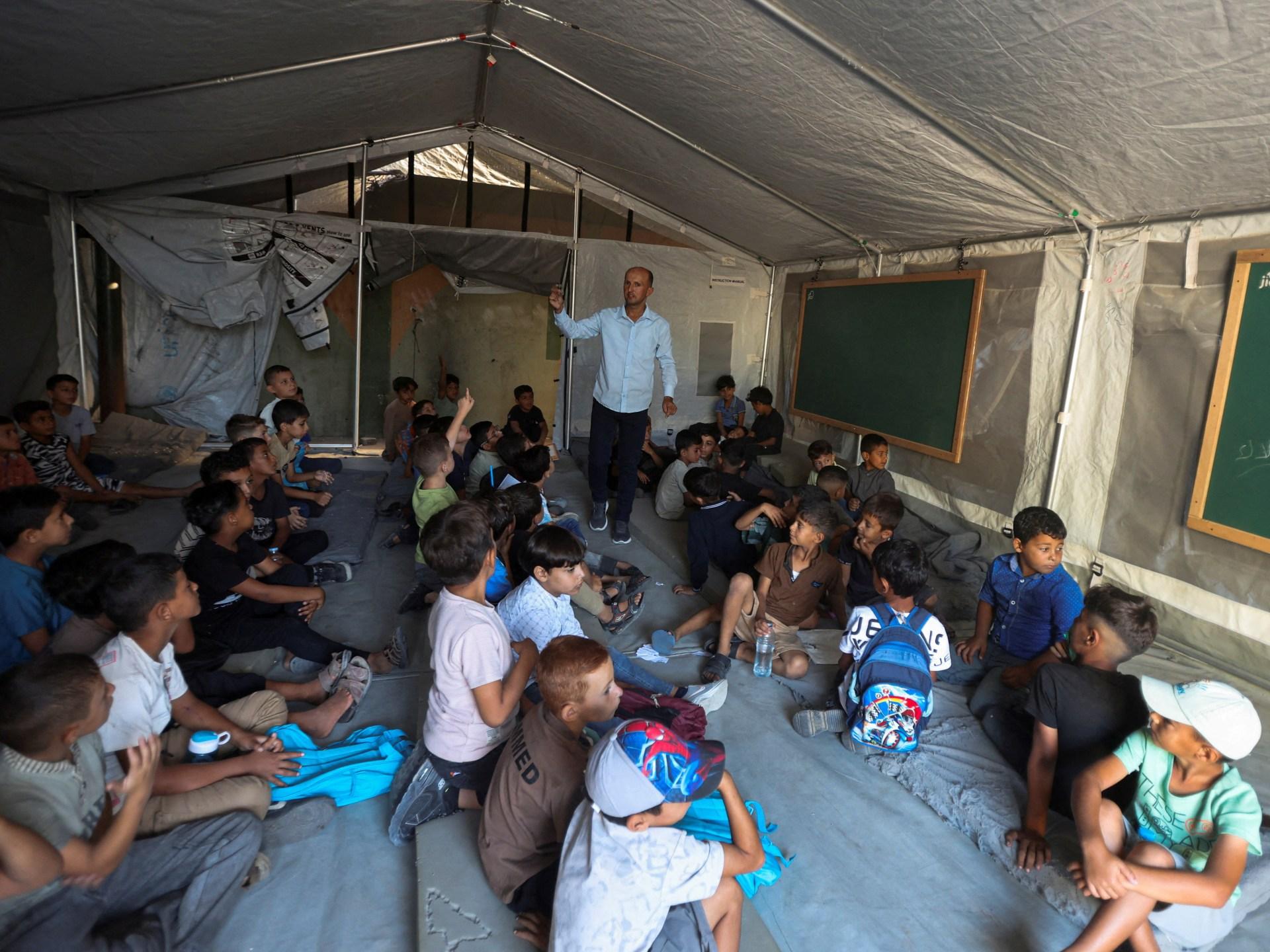
Hundreds of thousands of children in the Gaza Strip have returned to classrooms face-to-face for the first time in nearly three years, entering damaged school buildings, temporary classrooms, and tents amidst a severe shortage of basic supplies. Al Jazeera's report indicates that this return represents a fragile milestone in an area where a significant portion of the educational infrastructure has been destroyed.
UNICEF stated that 98 percent of schools in Gaza were either destroyed or damaged during the war, which it described as genocide. Local authorities estimate that approximately 660,000 students were deprived of regular face-to-face schooling. Ibrahim Ramadan, director of education in Eastern Khan Younis, noted that the war claimed the lives of nearly 22,000 students and over 770 education workers, including 532 teachers.
Speaking about his personal experience, student Muaid Abu Mustafa from Khan Younis said: "The last time I visited a school was three years ago. Now we are starting the academic year, which is a year of joy, happiness, and success. Despite everything, we will learn even if we are in a tent." The report adds that Muaid does not own suitable shoes or a notebook and sits on the floor in a hot tent.
Al Jazeera also notes that, with support from aid agencies, the Ministry of Education established dozens of temporary schools made of plastic sheeting and wooden metal structures, where some classrooms consist only of a few cots and a blackboard. A 15-year-old student named Samer Abu Salem said: "We studied on phones and did not see our teachers; now we are returning to pursue our dreams from one tent to another."
Analysis & context
Analysis & Context
From an analytical perspective, the return of students to schools despite harsh conditions reflects the resilience of Gaza's education system and the community's commitment to restoring a natural routine for children. However, reliance on tents and damaged buildings indicates that the educational infrastructure has been severely compromised and cannot be easily restored without immediate international assistance.
In a broader context, UNICEF data suggests that the widespread destruction of schools is not merely a result of military operations but part of a systematic strategy to disrupt the future generation in the region. Additionally, the fivefold increase in the price of school supplies due to Israeli import restrictions exacerbates the existing humanitarian crisis.
The situation remains extremely fragile, especially with Israel continuing to control more than 60 percent of Palestinian lands, meaning that students' return to schools remains vulnerable to ongoing security threats despite the cessation of major fighting in October 2025.