Sourced fact
The News
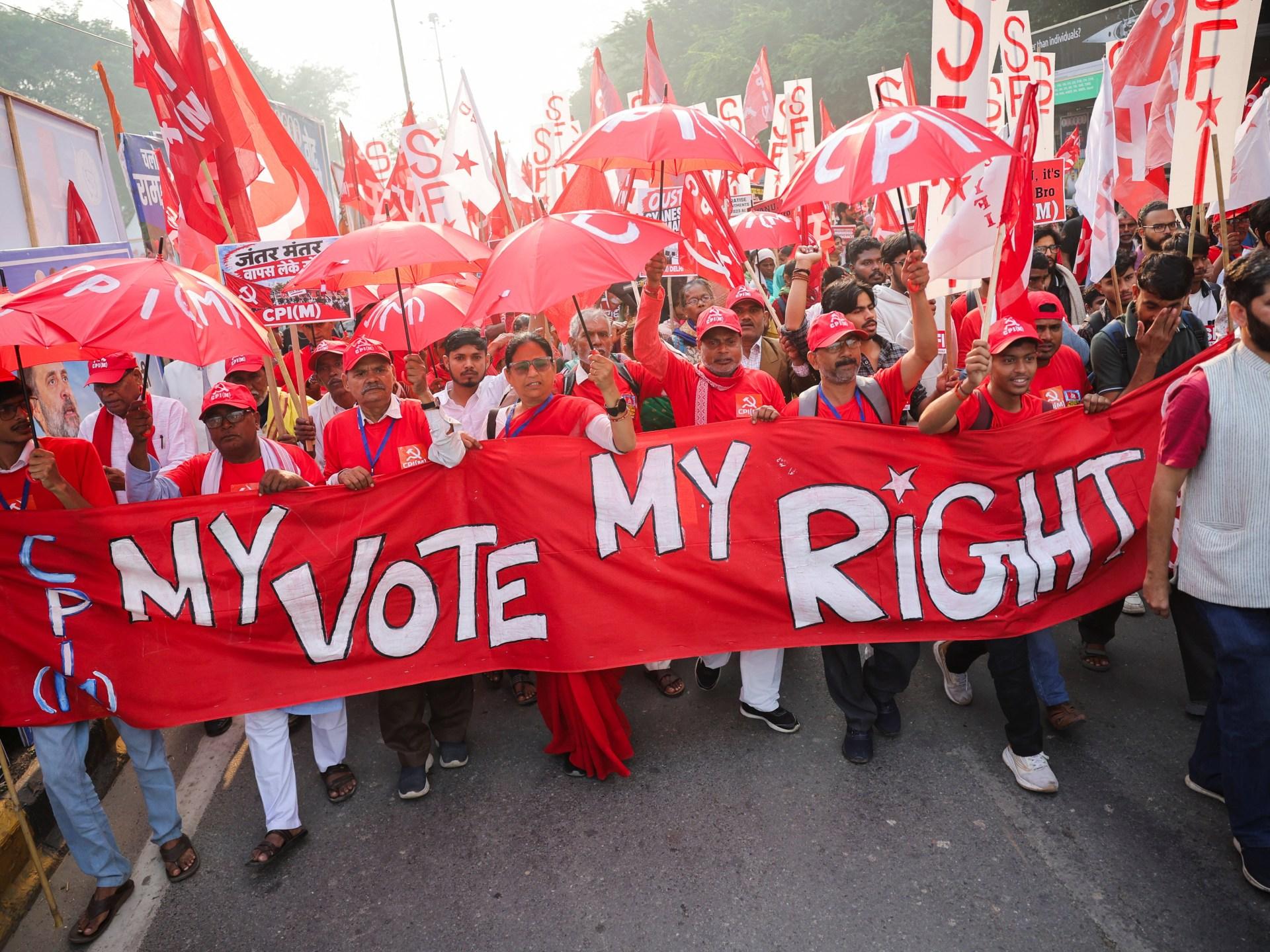
Thousands of people protested in the streets of New Delhi today on Sunday, demanding the resignation of India's Election Commission chief, Gyanesh Kumar, following changes made to the voter lists. According to Al Jazeera Net, this demonstration led by Rahul Gandhi of the Indian National Congress is the latest in a series of protests that have persisted for over a month against what opponents describe as bias in the process of reviewing electoral records in favor of Prime Minister Narendra Modi and his ruling party.
Opposition leaders assert that the deletion of more than 130 million names from the electoral rolls has disproportionately affected Muslims and other minorities who are less inclined to support Prime Minister Modi's Hindu nationalist Bharatiya Janata Party. In contrast, the Election Commission denies any bias in favor of any political party and confirms that voters whose names were mistakenly deleted can re-register themselves.
The Bharatiya Janata Party also accused the opposition of undermining democracy by challenging legal procedures, while opposition leaders described these steps as an attempt to alter the outcome of the upcoming 2029 general elections. Photos published by Al Jazeera Net show huge crowds marching through the streets of India's capital, expressing widespread anger towards the decisions made by the Election Commission.
Analysis & context
Analysis & Context
From an analytical perspective, this incident highlights the deep tensions currently plaguing India's political landscape between the ruling party and the two main opposition parties. The voter list issue is a sensitive point of contention where the opposition accuses the Election Commission of violating the principle of neutrality and favoring the religious majority at the expense of minorities, thereby raising concerns about the integrity of the upcoming democratic process.
In a broader context, these sustained protests indicate that trust between political parties and electoral institutions in India has reached low levels, especially with the 2029 general elections approaching. The scale of participation in the demonstration suggests that the issue is not merely an administrative dispute but one with wide-ranging social and political dimensions related to identity and political affiliation within Indian society.
This case serves as an example of how purely procedural issues such as reviewing electoral rolls can evolve into major political matters capable of influencing the trajectory of future elections. It also demonstrates how political parties in India utilize public protests as a tool to strengthen their position and mobilize their electoral base against political rivals.
This analysis also underscores the importance of independent institutions in maintaining the stability of large democratic systems like India, where any doubts regarding the neutrality of these institutions can erode public trust and undermine the legitimacy of future election results.