Sourced fact
The News
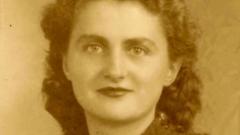
Solange Alexandre, one of the last surviving heroes of the French Resistance during World War II, has died at the age of 104. Her passing was announced from a care home in Loman. Among women, Alexandre was rare; she founded a special unit to fight against the Germans with her future husband and led this unit herself.
Solange Alexandre, who bore the surname Dubois at birth, was born in 1922 in the Sarthe region of western France into a patriotic family that suffered during World War I. In her memoirs, she recalled that her mother lost her first husband in the war while her father was wounded in 1917, making concepts of patriotism and honor part of her very blood.
In June 1940, she listened to the radio appeal issued by General Charles de Gaulle in London, calling on French people not to surrender to Germany. This prompted her to join the Resistance shortly after being recruited by a friend of her Tunisian-born father, Saïd Belhafaf. She used the code name "Corlay" to travel by bicycle through the Loman region, gathering information and delivering messages in the absence of mobile phones and private cars.
In 1943, she met her first husband, Guy Delieu, who had fled the French Gestapo after refusing to arrest some Jews. In April of the following year, they decided to join the forests known as the Maquis with a group comprising refugees and escapees from German forced labor, along with American and Canadian pilots. Alexandre recalled that she succeeded in escaping twice despite the Gestapo reaching her location searching for her. After participating in the liberation of Tours in September 1944, she ended the war with the rank of lieutenant in the French Interior Forces.
After the war, she worked as a teacher and followed her husband on his many missions as a gendarmerie officer in French overseas territories until he was killed in Martinique in 1960, after which she remarried in 1 981. She refused the Legion of Honour twice, stating that she had only done her duty and that others deserved it more. She finally accepted the honor in 2024, saying she was very proud even if her life were to end within weeks or a few months.
President Emmanuel Macron called for Alexandre's commemoration after her death via a social media post, stating that France would never forget her and that her duty had been the freedom of the country.
Analysis & context
Analysis & Context
From an analytical perspective, Alexandre's passing represents a significant loss to French collective memory, which relies on eyewitnesses to the suffering of World War II. Historically, women's roles in the French Resistance were limited compared to men, making her achievement in leading a special unit an exceptional feat worthy of documentation and remembrance.
In a broader context, Alexandre's story points to a fundamental shift in the concept of national duty, moving from mere obedience to military orders to defending human values and personal freedom against tyranny. Her repeated refusal of honors also reflects the French Resistance culture that preferred field work over official accolades throughout the war period.
President Macron's interest in honoring her in her later years highlights the French state's desire to maintain historical links between generations and affirm the continuity of freedom values for which their ancestors struggled. Furthermore, her personal life story, encompassing education and work in French colonies, adds a human dimension to Resistance history, which often focuses solely on military operations.
Finally, Alexandre's memory serves as a reminder that freedom is not given but fought for by ordinary individuals who chose to sacrifice their personal security for a better future for their nation.