Sourced fact
The News
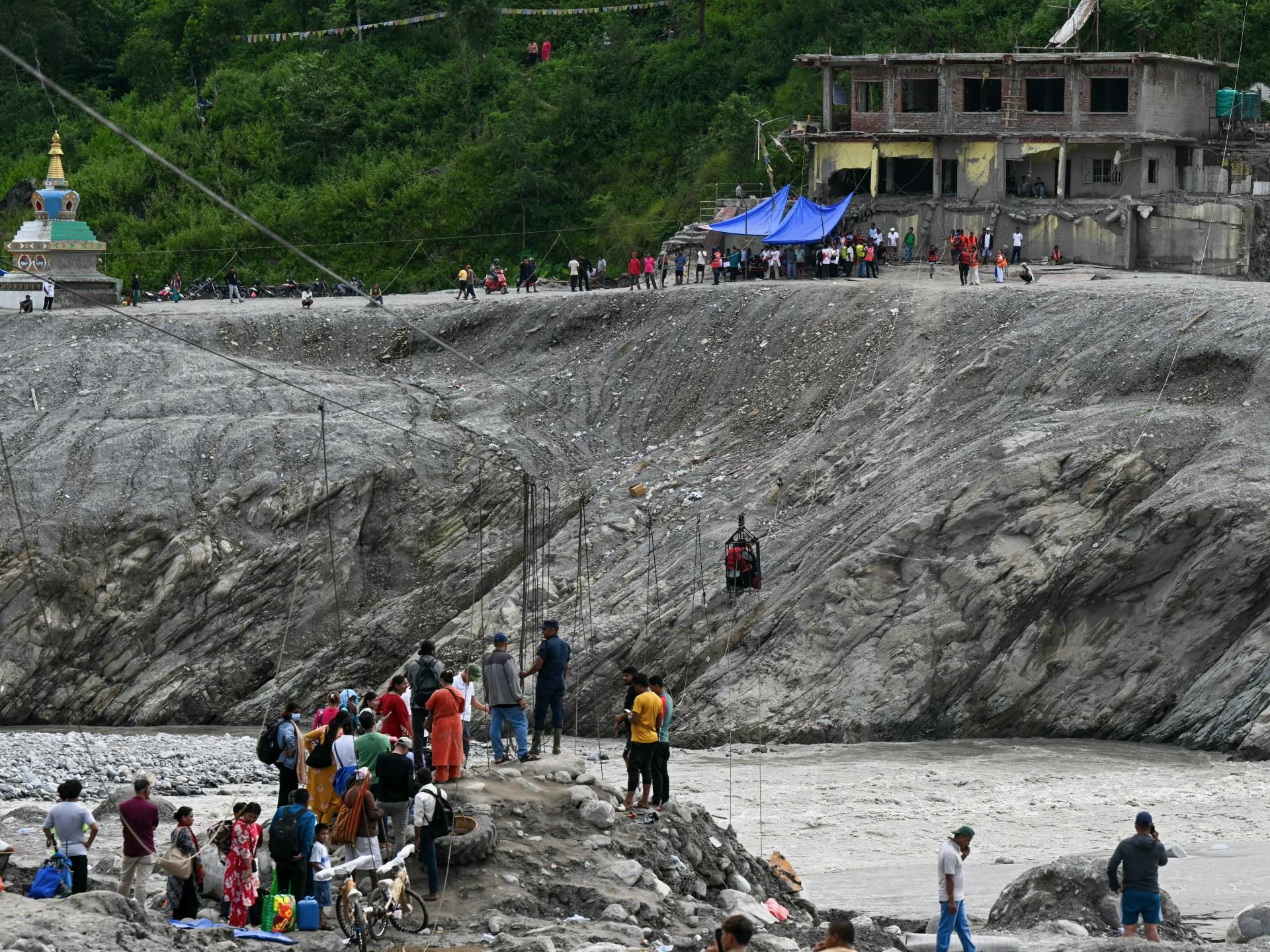
The Raswa region in Nepal witnessed a massive natural disaster on the morning of August 26, triggered by a collapsing mass of ice and rocks that unleashed a destructive wave of water and mud pushing toward the Chinese border. Al Jazeera reports clarified that this catastrophe was not merely a standard flood but a reactive chain of events resulting in over 1,400 deaths, thousands missing, and widespread destruction of infrastructure.
Researchers indicated that the energy released in this event exceeded that of the Hiroshima atomic bomb. The director of the Disaster Studies Center at Tribhuvan University described the incident as unprecedented in scale and impact. Al Jazeera continued, noting that the floods destroyed 12 hydroelectric power stations and buried roads, bridges, and homes under debris carried by waters through valleys.
In the context of warnings against repeating such disasters, officials from the International Centre for Integrated Mountain Development warned against the misconception that less monsoon rain implies lower danger, emphasizing that relative drought does not eliminate the risk of sudden floods caused by thunderstorms. Experts also clarified that current early warning systems often rely on rainfall or river levels, which may fail in cases of glacial collapses occurring beyond local communities' line of sight.
Irfan Rashid, a glaciologist from Kashmir University and co-author of a recent study, stated that glacial melt and snow cover degradation will exacerbate water scarcity by the end of the century unless immediate actions are taken. The agency continued, noting that the study published in the Journal of Geology identified 155 glacial lakes in Kashmir, five of which are highly sensitive to glacial lake outburst flows that could threaten thousands of buildings and major bridges.
The agency added that the Nepal catastrophe has raised severe concern in other regions such as Pakistan, where the government began expanding early warning networks under a UN program to protect flood-exposed valleys. It continued that technology alone is insufficient to save lives; people must quickly translate warning messages and know available escape routes before the flood arrives.
Analysis & context
Analysis & Context
Analytically, these events reveal a new dangerous landscape where one hazard triggers another: a mountain collapse may dam a river, forming a temporary lake, whose subsequent explosion sends debris that destroys infrastructure and blocks another river, causing new floods. Current early warning systems are often built around specific risks like rainfall or rising river levels, but the nature of the Himalayas does not respect these static classifications.
In a broader context, the International Centre for Integrated Mountain Development warned in July against the common misconception that a lighter monsoon season means lower danger, noting that seasonal drought can be dangerous due to powerful thunderstorms causing catastrophic floods. A study published this year in the Journal of Glacial Geology showed that the area of glacial lakes in Indian-administered Kashmir increased by 26% between 1992 and 2024, with five lakes classified as having high explosion potential.
Risks continue to spread through a chain of sequential events; an outburst at a lake in the upper reaches may trigger secondary events downstream, threatening thousands of buildings, major bridges, and hydroelectric power stations. Glacial melt, snow cover erosion, and permanent snowpack degradation in the Indus-Koch-Himalayan system will increase water scarcity by the end of the century unless urgent measures are taken.
Pakistan has already begun building an early warning network in the Gilgit-Baltistan region, which contains hundreds of glaciers and glacial lakes, where warning systems, evacuation shelters, and disaster management centers have been established with UN support. However, technology alone does not solve the problem; the presence of a sensor is insufficient without someone receiving the message, understanding its meaning, and providing a safe path for downstream communities to evacuate.