Sourced fact
The News
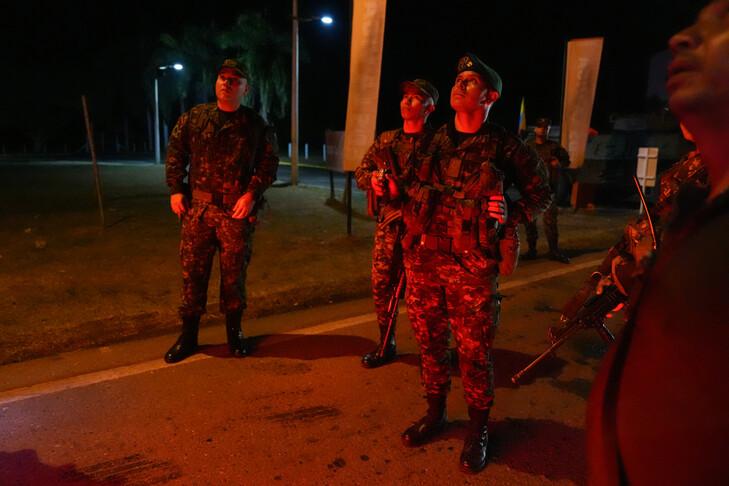
The Colombian Armed Forces announced on Saturday that a drone strike targeted a military unit in the Ucana area of the North Santander department, a location near the Venezuelan border, resulting in the deaths of at least three soldiers and injuries to four others. The attack, which involved drones followed by an internal confrontation within a military compound during the night of Friday, according to the statement issued by the Colombian Army.
Local officials have blamed the National Liberation Army (ELN) for carrying out this nighttime assault, noting that two soldiers were killed at the scene while the third died after receiving medical treatment, as reported by the army via its social media platform "X". President Abiud De La Espriella strongly condemned the attack, stating that the state will apply all its legitimate force against criminals for every police officer or soldier killed, according to what was reported by The Washington Post.
The Catatumbo region, spanning the North Santander and Cesar departments, has been a primary stronghold of the armed ELN group since 1964, and also hosts former factions of the Revolutionary Armed Forces of Colombia (FARC) that rejected the peace agreement reached a decade ago. These groups compete for control of the strategic area bordered by Venezuela, which is considered one of Colombia's main coca production regions.
Analysis & context
Analysis & Context
From an analytical perspective, this attack highlights the continuation of security tensions in northeastern Colombia, where armed groups vie for control over strategic border areas that allow them access to illicit resources such as coca cultivation and trafficking. The presence of anti-peace agreement factions within the ELN structure complicates the security landscape and grants the group greater flexibility and influence in regions like Catatumbo.
In a broader context, reports indicate a series of repeated attacks carried out by the armed group over recent months, including a car bomb explosion that killed a civilian and injured others outside a police station in northeastern Colombia, and another blast near a police center in Cúcuta that injured several officers. These successive attacks reflect an escalation in the group's military activity and its increasing capacity to target the state's security infrastructure.
President Abiud De La Espriella's response underscores the government's shift toward tightening measures against armed groups, affirming that the state will not hesitate to use all legitimate means to punish those who threaten its security and the safety of its personnel. However, the nature of the border region with Venezuela and the overlapping regional interests make resolving these conflicts a complex challenge requiring international cooperation and smart crisis management.