Sourced fact
The News
The Independent International Commission of Inquiry on Iran, under the UN Human Rights Council, has stated there are reasonable grounds to believe that the United States committed war crimes during two strikes launched against Iran, one targeting a school in the southern city of Minab. In a report released on Thursday, the commission also accused the Iranian government of committing crimes against humanity against its own people while suppressing protests that erupted at the end of last December. The document indicates that the mission, led by Bangladeshi expert Sara Hussein since 2022, presented these findings to the Human Rights Council, which comprises 47 UN member states.
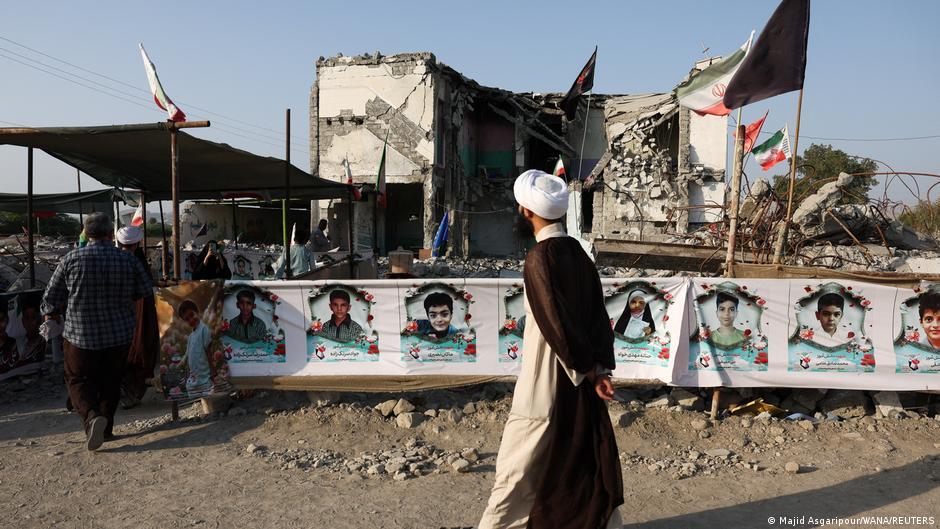
The commission stated that the first strike targeted Shajreh Taibe Elementary School in Minab on February 28, resulting in the deaths of more than 150 people, including approximately 120 students according to Iranian authorities. The experts confirmed that the school was clearly a civilian facility and was not used for military purposes, and the attack was indiscriminate, causing civilian casualties and damage to civilian infrastructure, thereby constituting a war crime under international law. The commission reached the same conclusion regarding a strike launched by US forces on a sports center in Lamerd on the same day; the strike destroyed adjacent residential buildings and a school, killing 22 civilians and injuring others.
In contrast, the Pentagon declined to comment on the commission's report, stating that its investigations are still ongoing and no data is available for release at this time. On his part, the White House issued a strong statement through spokesperson Jessica Kelly, in which it described the UN Human Rights Council as having achieved nothing for human rights but instead spreading "serious nonsense" for decades. Kelly added that the only party in this conflict to have committed war crimes is the Iranian regime, which killed thousands of its own people and Americans abroad, carried out terrorist operations in the Strait of Hormuz, and launched indiscriminate attacks against regional neighbors.
The commission also found that Iranian authorities conducted widespread and systematic attacks on civilians during the protests, including unlawful killings, torture, arbitrary detention, enforced disappearance, and severe restrictions on freedom of expression. Reports indicate that Tehran accused "terrorists and protesters" supported by opponents residing abroad and foreign enemies, including the United States and Israel; however, the commission cannot independently verify the number of casualties but believes it is significantly higher than the official figure of 3,038 killed.
Analysis & context
Analysis & Context
From an analytical perspective, this report represents a significant diplomatic and legal step in the context of escalating international tensions, as the UN seeks to document violations regardless of political bias. While reports from such commissions are not legally binding upon release, they form part of the international evidence that may be used in future international courts or judicial investigation committees for accountability regarding military actions.
In the broader context, the Iranian regime faces increasing international criticism due to the suppression of protests that erupted at the end of December, with the UN accusing it of crimes against humanity including torture and enforced disappearance. These accusations are part of a long-standing debate over the nature of the conflict in the region and its impact on ordinary civilians in both adversarial nations.
The role of the independent commission, established in 2022, highlights an international effort to neutralize bias, as it consists of independent experts aiming to provide an objective picture of events irrespective of the official narratives of the involved states. Its reports have elicited divergent reactions: the US defended its actions while Iran accused the commission of Western bias.
The data in the report indicates that the number of dead and injured during the protests may far exceed the official figures released by Tehran, which recorded 3,038 killed and 25,000 wounded, reflecting a significant gap between the official narrative and the on-the-ground reality documented by international human rights organizations.