Sourced fact
The News
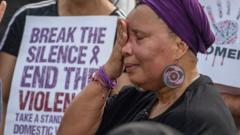
Latest crime statistics in South Africa have revealed the murder of nearly 600 women between July and September of this year, a figure that includes 13 horrific murders in the Johannesburg area. These numbers are sparking a wave of national anger amidst immense pressure on the police in a country recording one of the highest rates of gender-based violence and femicide globally.
Statistics released on Friday revealed that 581 women were killed during the three-month period, including 131 cases in Gauteng province, which includes the capital Johannesburg. Officials pointed to a slight decrease in the number of murders compared to the same period last year, where police recorded 5,590 murder cases, equating to an average of nearly 60 murders per day, although it remains unclear whether the rate of female victims has risen or fallen due to the police previously stopping the publication of these figures.
In the latest shocking incident, five women and a small child were murdered in the Free State province at the beginning of this week. The head of Gauteng Police stated that eight people have been arrested so far regarding the murder of the 13 women who sparked widespread outrage, noting that three arrests relate to the case of Elizabeth Mposikomu, who disappeared while sitting on her daily commute before her body was found filled with bruises and semi-nude.
The security official clarified that two other individuals were detained in connection with the death of Jabulile Ntembe, whose body was found half-naked and wrapped in a cloth on the side of a road in Boxberg, while another suspect was arrested concerning the death of Ntembewethu Nxumalo, whose body was found in a cemetery. It was also mentioned that previous arrests were made in July regarding the death of Busisiwe Mahlangu, whose body was one of the first 13 discovered in the area.
Deputy Minister of Police Phuthuma Nhleko called for greater efforts to prevent violence against women and children, while President Cyril Ramaphosa pledged that "no stone would be left unturned" to find the perpetrators of these crimes. These incidents are part of a comprehensive crisis declared by the government last year as a "national disaster," where 13 women were killed in Johannesburg alone, their bodies filled with bruises and semi-nude in public places.
Analysis & context
Analysis & Context
From an analytical perspective, the rise in female homicides in South Africa reflects a deep and ongoing crisis within the South African society, where the country is consistently classified among nations with the highest rates of sexual violence and femicide. Despite a slight decrease in the total number of murders compared to last year, these statistics show that the nature of crimes against women remains extremely dangerous and characterized by brutality that goes beyond mere assault to intentional murder and the public concealment of bodies.
In the broader context, statements by Acting Police Minister Phuthuma Nhleko point to the urgent need for greater efforts to prevent violence against women and children, which aligns with international and local efforts to address this severe phenomenon that negatively impacts local community stability and national economy. Furthermore, President Ramaphosa's declaration of considering violence a national disaster reflects political leadership's awareness of the magnitude of the humanitarian and legal crisis represented by these crimes, despite the significant challenges faced by law enforcement agencies in achieving justice quickly and efficiently.
The role of media and civil society in highlighting these issues through coverage of cases such as the disappearance of Elizabeth Mposikomu, which received widespread media attention, creates public pressure pushing authorities towards transparency in investigations. However, the continued discovery of semi-nude female bodies in public places indicates a significant gap in security and social protection that women face in rural and impoverished areas within the country.