Sourced fact
The News
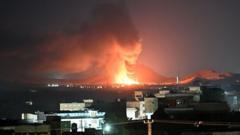
The Taliban government in Afghanistan announced that four civilians were killed in a wave of airstrikes launched by Pakistan on its territory, marking a new escalation in tensions between the two countries. Sources affiliated with the British agency BBC reported that the strikes targeted provinces including Kandahar, which is considered the base of Taliban authority, while Pakistani officials confirmed that their forces hit 10 targets without specifying their exact locations.
Zabihullah Mujahid, spokesperson for the Taliban government, stated that the attacks occurred in the provinces of Kandahar, Paktia, and Khost, describing Pakistan's move as "reckless, dangerous, and hostile." In Paktia, an official reported that military aircraft bombed a unit of the Afghan army controlled by the Taliban without providing details about the casualties.
On his part, Pakistani Information Minister Attaullah Tarar said the strikes were "targeted, precise, and proportional," limited only to specific military targets linked to attempts to attack Pakistan. He added that any further provocative act would be responded to, while the Taliban rejected Islamabad's claim that Kabul harbors the Pakistani Taliban movement (TTP), which carried out a deadly attack on a mosque in a police complex in western Pakistan last week.
A local eyewitness indicated that the strikes occurred around midnight amidst panic, later confirming that no one was injured despite some damage to houses in Khost. Meanwhile, Taliban officials denied Pakistani claims that drones launched by their government from Afghanistan were responsible, while the UN mission Unama confirmed that at least three civilians were killed in one of the attacks.
The agency noted that the two countries had enjoyed three months of relative calm before clashes resumed following an attack that resulted in 31 deaths by a group linked to the Pakistani Taliban. The United Nations also stated that cross-border violence between 2025 and 2026 claimed the lives of at least 499 civilians and injured more than 1,200 others, with the worst incident occurring in March when over 269 people were killed in a Pakistani airstrike on Kabul.
Analysis & context
Analysis & Context
From an analytical perspective, this new escalation represents a continuation of a cycle of mutual violence between Islamabad and Kabul that has resurged after international mediation efforts failed to achieve a lasting solution. Data released by the UN mission Unama shows that armed cross-border violence between Taliban forces and Pakistani troops has resulted in hundreds of civilian deaths since October 2025, highlighting the human cost of this conflict.
In the broader context, the Taliban government rejects Islamabad's claims that Kabul harbors terrorist groups, considering political extremism purely an internal Pakistani issue. However, Islamabad's accusations against Kabul for taking strict measures against any use of Afghan territory for terrorism come within a framework of attempting to justify military operations carried out in the border region, which resulted in the deaths of several fighters.
Reports also indicate that the worst single incident occurred in March when over 269 people were killed in a Pakistani airstrike on Kabul, a claim denied by Islamabad, which insisted on accurately targeting military facilities and terrorist support structures. The apparent failure to implement a permanent ceasefire since March reflects the difficulty of reaching an agreement that satisfies both parties amid continuing disagreements over the use of border territories.
Finally, during a meeting on the sidelines of this week's United Nations General Assembly, Pakistani Foreign Minister Ishaq Dar called for "tangible and verifiable" measures to ensure that Afghan territory is not used for terrorism, indicating the continuation of diplomatic efforts despite ongoing military operations on the ground.