Sourced fact
The News
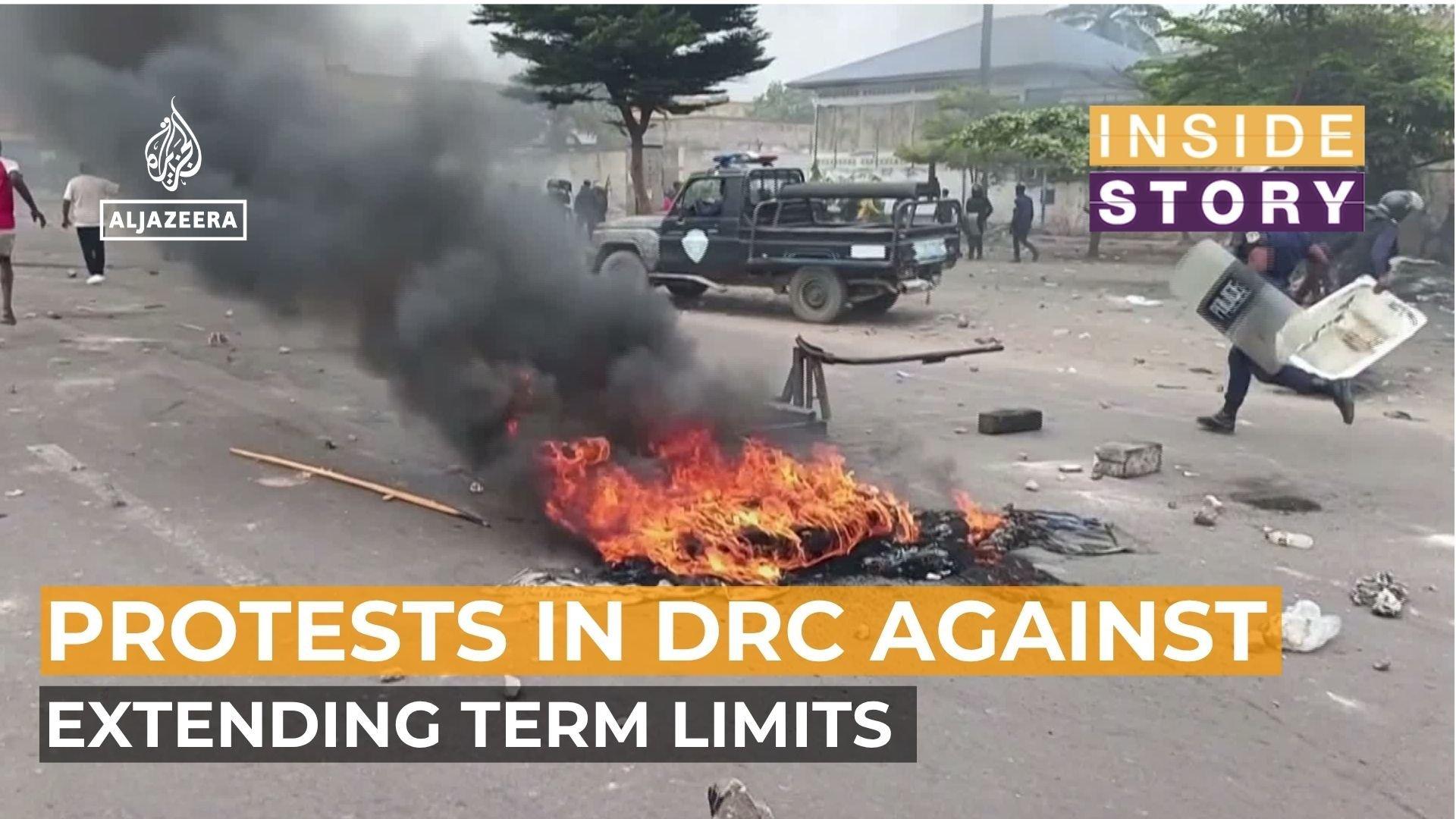
A bill submitted by the National Assembly in the Democratic Republic of the Congo has sparked widespread debate after being approved by parliament. It stipulates the conditions necessary for a constitutional referendum that could open the door for President Felix Tshisekedi to run for a third term. Massive protests have erupted across the country, with demonstrators expressing their rejection of this law, which they describe as an attempt to usurp power. Protesters argue that extending the current president's term is unconstitutional without holding a direct popular referendum.
These protests occur at a time when the DRC is facing enormous security and health challenges, suffering from a prolonged conflict in its east and a rapidly spreading Ebola epidemic that threatens to further undermine state stability. The negative reaction to this legislation has escalated social tensions, with the government accused of rashly attempting to extend President Tshisekedi's rule despite the exceptional circumstances the country is going through.
Political analysts and experts from regional and international research centers have participated in discussions on this issue, including Kamwamba Musavuli, a political analyst at the Congo Research Center in Kinshasa, and Richard Moncrieff, Director of the Great Lakes Region Project at the International Crisis Group. The debate focuses on understanding the real motives behind the president's desire to remain in power and the potential regional implications of parliament's decision, which could lead to further internal unrest.
Analysis & context
Analysis & Context
From an analytical perspective, the National Assembly's decision to adopt legislation paving the way for a constitutional amendment is a sensitive step in the history of the Democratic Republic of the Congo, especially since the current constitution imposes strict limits on the number of terms a president can serve. This raises questions about the balance of power within the political institution: while parliament appears to be asserting its authority by organizing the referendum, opponents view this as overstepping constitutional boundaries under exceptional circumstances.
In a broader context, the DRC is going through a difficult transitional phase marked by multiple crises whose interconnections are intensifying—from the armed conflict in the east draining human and material resources to the outbreak of epidemics weakening the state's ability to deliver essential services. These new factors related to President Tshisekedi's rule add another layer of political complexity, as any escalation in street protests could hinder efforts at national reconciliation and crisis management.
Regional reaction to the internal crisis in the DRC remains a critical factor, given that instability in this large country directly affects its neighbors in the Great Lakes region and the Sahel. International organizations such as the International Crisis Group and the African Union are monitoring developments closely, fearing that local protests could turn into new armed conflict threatening regional security as a whole.
Finally, the future of the Democratic Republic of the Congo largely depends on how civil society and parliament handle this constitutional debate. It is essential to balance the rule of law with respect for popular will under conditions that may not allow for new political experiments without sufficient guarantees for state stability.