Sourced fact
The News
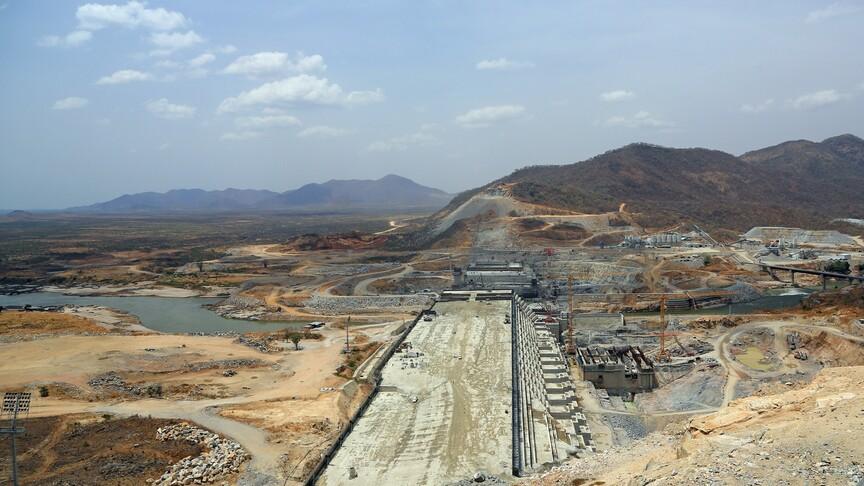
Egypt considers the Grand Ethiopian Renaissance Dam (GERD) "illegal" and reserves its right to take any necessary measures to protect its water security, according to what Water and Water Resources Minister Hany Sweilem clarified on Sunday in Cairo. This was stated during a briefing organized by the State Information Service in the presence of representatives of foreign media outlets, where the minister emphasized that completing the dam and the passage of time does not mean Egypt's acceptance of the situation or abandoning its rights.
Sweilem said that the 2015 Principles Declaration signed between Egypt, Ethiopia, and Sudan served as a roadmap aimed at establishing commitments for cooperation, but it did not grant Ethiopia the right to take unilateral actions regarding the dam. He added that continuing to fill and operate the dam without an agreement constitutes a violation of those commitments, noting that Cairo had tried more than once to reach understandings, but Ethiopia failed to respond and instead violated the declaration itself.
Sweilem warned that uncoordinated operation of the dam could lead to sudden increases or sharp drops in water flows, affecting dams in both Egypt and Sudan simultaneously. He stressed that Egypt's main concern relates to the timing and volume of water discharge and the rules governing it, rather than merely Ethiopia's use of the dam for electricity generation.
The Egyptian minister also refuted Ethiopia's claim that Egypt benefits from the largest share of Nile waters, clarifying that its annual share of 55.5 billion cubic meters represents only about 2.7% of rainfall totaling approximately 2 trillion cubic meters in the Nile Basin. He pointed out that Ethiopia received more than a trillion cubic meters of rainfall in 2023, while Egypt relies on deep non-renewable groundwater reserves, unlike Ethiopia's renewable resources.
Sweilem called for enhancing cooperation in rainwater harvesting and improving agricultural water use efficiency, considering that diversifying Ethiopia's energy mix through solar and wind power could alleviate water-related pressures. Cairo also reiterated a call to conclude a binding trilateral agreement between Egypt, Sudan, and Ethiopia regulating the filling and operation of the dam to ensure no harm is done to the rights and interests of the three countries, while Ethiopia insists that operating the dam does not require a binding agreement.
Analysis & context
Analysis & Context
From an analytical perspective, this new escalation represents a fundamental shift in Egypt's language of dealing with the water file, moving from merely calling for negotiations to directly classifying the Ethiopian project as illegal. This classification aims to isolate the project internationally and highlight that any unilateral action contradicts international law and the guiding principles previously agreed upon among the three countries.
In the broader context, the cited data indicates a huge disparity in water resources and climatic conditions between the two countries, where Ethiopia relies heavily on rainfall ("green water") while Egypt depends on non-renewable groundwater and permanent Nile waters. This fundamental difference means that any change in operation patterns directly and disproportionately affects the stability of Egypt's water supplies, justifying Cairo's firm stance.
Historically, trilateral negotiations between Egypt, Sudan, and Ethiopia have repeatedly stalled and been disrupted since 2020, returning to turmoil again in 2024 without tangible results. This fluctuation reflects the depth of the crisis and mutual distrust, as Ethiopia rejects the idea of a binding agreement that might limit its sovereignty over the dam, while Cairo and Khartoum insist on the necessity of a binding legal framework to guarantee their water rights.
Finally, the Water Minister points to the possibility of cooperation in other areas such as exploiting solar and wind energy in Ethiopia to improve its energy mix and reduce pressure on water resources, in addition to enhancing agricultural water use efficiency. These proposals open new horizons for regional cooperation if the dam issue is separated from sustainable development and renewable energy files that could be shared areas for building rather than destruction.