Sourced fact
The News
The Ministry of Education in South Korea announced the discovery of 111 candidates who used unauthorized smart devices during last week's critical national "Suneung" exam, amidst urgent efforts to combat cheating aided by artificial intelligence. These efforts garnered widespread attention after President Lee Jae-myung described the current system as needing radical reform due to its significant impact on the distribution of opportunities and resources in society.
According to official data released on Friday, five of these candidates were caught in the act of cheating using their smart devices during the test. This followed severe warnings from President Lee, who pointed out that using artificial intelligence for cheating in such exams shakes the fundamental order of society by undermining fairness and public trust.
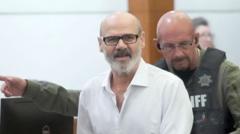
The period preceding the exam witnessed a series of scandals that raised concerns. The top scorer of the tax accounting exam, which is conducted using AI-assisted methods, admitted to using a miniature camera and a smartphone along with AI tools to achieve an exceptional score despite answering only one question incorrectly. In this context, candidate Han Won-seok clarified in a video posted on Sunday that he used the miniature camera to photograph exam questions, sent them to artificial intelligence, and then verified his answers via his mobile phone.
This was not an isolated incident; candidates previously caught cheating using smart glasses during university entrance exams were apprehended, as were students in middle and high schools using similar technology for this purpose. In an attempt to curb this phenomenon, authorities sent emergency alerts to all mobile phones in the country between 8 a.m. and 3 p.m. on Thursday to warn students about unauthorized devices inside exam halls.
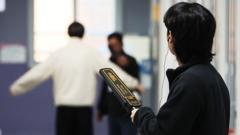
Additional measures included instructing students to cover buttons on their clothing to prevent hidden cameras and conducting precise inspections of glasses, causing even those who cheated successfully to worry that their regular glasses or contact lenses might be misunderstood as smart devices. The "Suneung" exam is held every November and lasts for eight continuous hours, during which half a million students sit to answer approximately 200 questions across various subjects including Korean language, mathematics, social sciences, and natural sciences.
Analysis & context
Analysis & Context
From an analytical perspective, this revelation marks a critical turning point in how South Korea addresses digital-era challenges in education. Traditional threats like mobile phones are no longer sufficient; new threats relying on advanced technologies such as smart glasses and miniature cameras that can be easily concealed have emerged. The government's response of sending nationwide alerts via mobile phone networks demonstrates the state's seriousness in protecting the integrity of its educational system, although these measures may cause concern among innocent students who fear their regular glasses might be considered smart devices.
In a broader context, the "Suneung" exam remains a massive annual event in South Korea standing at a crossroads for millions of lives. Construction work stops, flights are grounded, and military training halts to provide an ideal environment for the eight-hour exam. This exam is a pivotal moment determining students' positions in universities and their future careers and social standing, which explains why the state treats any attempt at cheating in it as a crime threatening the stability of the entire society rather than merely a minor administrative violation.
These recurring incidents indicate that the gap between the evolution of cheating technologies and the speed of educational system responses remains significant, necessitating continued updates to laws and surveillance technologies. Furthermore, the admission by a 34-year-old student of his cheating using advanced tools highlights how non-students can also exploit the education system for unfair gains, placing an additional burden on testing authorities to ensure fairness in the distribution of opportunities and resources within Korean society.