Sourced fact
The News
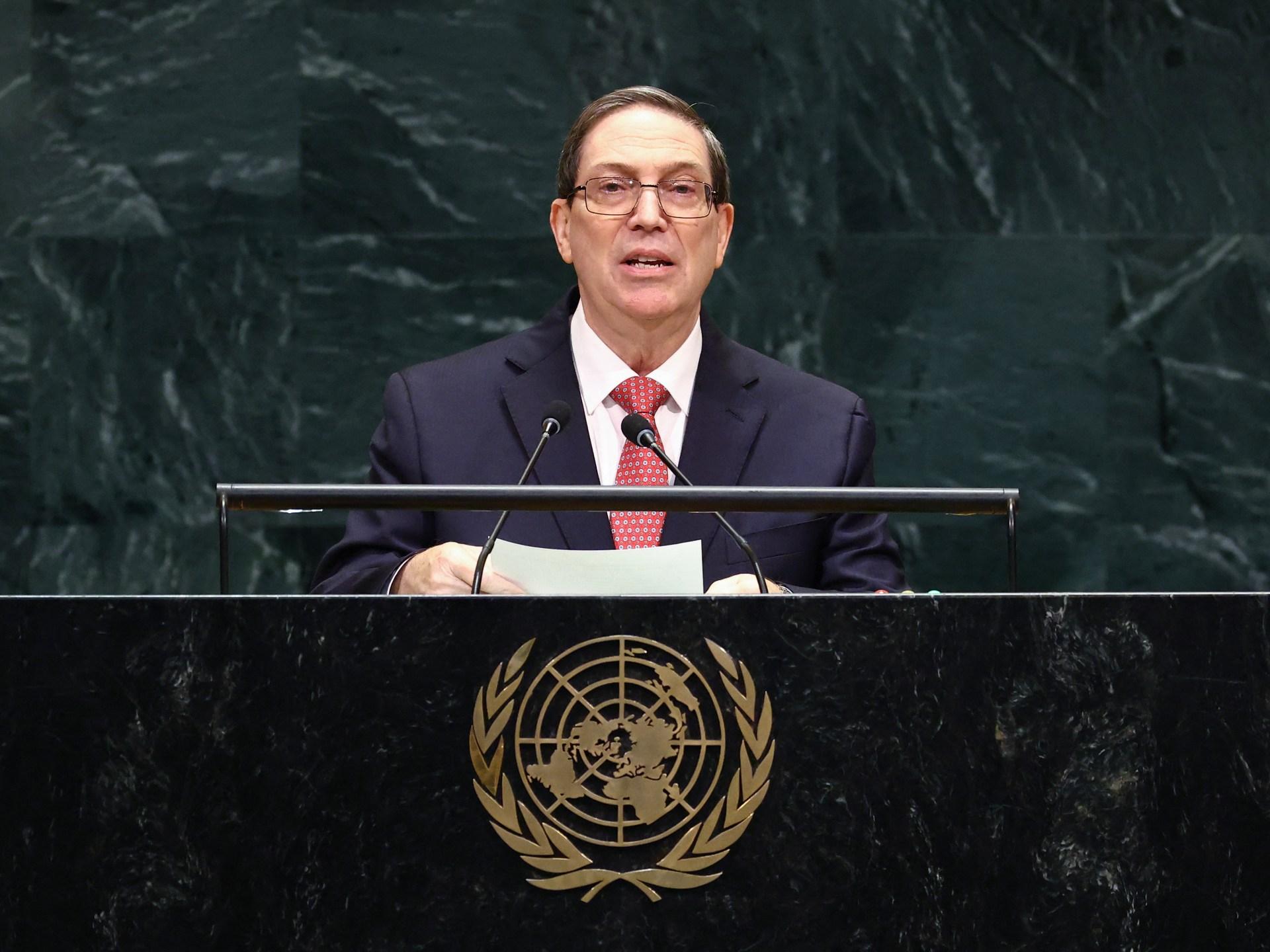
Cuban Foreign Minister Bernardo Rodriguez condemned the US oil embargo on his country in his address to the United Nations General Assembly, describing it as a "collective punishment" measure aimed at creating a humanitarian crisis. These statements come amid ongoing tensions between Washington and Havana, while President Donald Trump anticipated reaching an agreement without the need for military action.
According to the Cuban statement, Rodriguez affirmed Havana's constant readiness to negotiate with the US government to resolve bilateral differences, emphasizing that talks must be based on the principle of sovereign equality and conducted without preconditions. The Cuban spokesperson also warned of the devastating consequences of any potential US military action, expressing hope that such an event never occurs.
On his part, President Trump described Cuba as a "completely failed state" during his address to the General Assembly, reaffirming his desire to help the island and change its government system. The Cuban delegation left the hall during this speech, which he characterized by asserting that freedom would soon return to the island.
Cubans have faced an American economic embargo for over 60 years, in addition to the new oil embargo that has caused a severe fuel shortage and continuous power outages. Countries such as Brazil, Mexico, and Pakistan have criticized these unilateral measures and called for ending the economic embargo and oil sanctions imposed on Cuba.
Analysis & context
Analysis & Context
From an analytical perspective, Cuba's stance at the UN General Assembly represents a clear diplomatic escalation aimed at isolating the US embargo internationally, especially with the overwhelming support of the Assembly since 1992 to call for the end of this economic, trade, and financial blockade.
In the broader context, Trump's contradictory statements—anticipating a deal while describing Cuba as a "completely failed state"—indicate an American strategy intended to exert political and economic pressure to achieve regime change in Cuba without engaging in direct war, which violates international principles calling for peaceful conflict resolution.
Furthermore, the positions of countries like Brazil, Mexico, and Pakistan, which have called for ending the embargo and pressuring Washington, demonstrate that this issue is no longer merely a bilateral dispute but has become an international matter raising concerns among many nations linked to the Caribbean region and the global community.