Sourced fact
The News
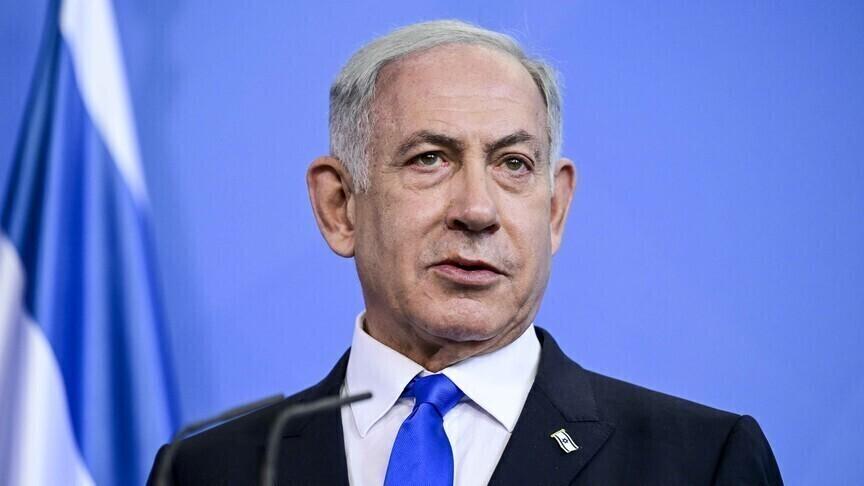
Israeli Prime Minister Benjamin Netanyahu attacked five opposition party leaders on Saturday following their agreement to coordinate their joint strategies to replace his government ahead of the Knesset elections scheduled for October 27. According to Anadolu Agency, this attack served as an initial response from Netanyahu to the meeting of opposition leaders held at Yair Lapid's home in Tel Aviv to discuss their political plans.
In his first response to this agreement, Netanyahu claimed that "Yesh Atid" leader Gadi Eisenkot seeks to form a coalition government with Yair Lapid, Yair Golan, Naftali Bennett, Avigdor Lieberman, and Arab parties. Netanyahu posted these claims via the American social media platform X, where he wrote that "only a strong Likud party can stop them," and added an AI-edited image featuring Mansour Abbas, leader of the United Arab List, and Ahmed Tibi, leader of the Hatikva-Ta'al movement.
Channel 12 Israel reported that the gathering of the five party leaders—Yair Lapid from "Yesh Atid," Gadi Eisenkot from "Yesh," Naftali Bennett from "Together," Avigdor Lieberman from "Israel Beiteinu," and Yair Golan from the Democratic Party—resulted in an announcement that replacing the current government is their most important common goal despite their ideological differences. The leaders also agreed not to attack each other during election campaigns before forming a new government and to work on increasing voter turnout and expanding the support base for the opposition bloc.
However, the five leaders did not reach an agreement on which of them would run for Prime Minister, leaving the Israeli political landscape open to multiple scenarios in the coming months ahead of the elections scheduled for October 27 this year.
Analysis & context
Analysis & Context
From an analytical perspective, this historic gathering of the Israeli opposition represents a fundamental shift in the dynamics of the local political arena, as parties have moved from individual competition to collective coordination to confront Prime Minister Benjamin Netanyahu. Their decision not to attack each other during the election period is a proactive step aimed at uniting ranks and avoiding divided voices that could benefit Netanyahu in the upcoming elections.
In a broader context, this move indicates that the Israeli opposition has begun to realize that complex security and political challenges require unified leadership rather than internal division, which might open the door to Netanyahu's hardline policies. Additionally, the inclusion of Arab parties such as the United Arab List and the Hatikva-Ta'al movement in this alliance reflects an attempt to build a broad front encompassing different segments of Israeli society.
The lack of agreement on nominating the next Prime Minister highlights the importance of the upcoming phase, as this point will determine the shape of the new government and its domestic and foreign policies. This disagreement could be a source of future tensions within the opposition front itself if not resolved before the scheduled elections on October 27.
Finally, Netanyahu's response via social media platforms and his use of AI to edit images reflects his defensive and offensive strategy in facing the growing opposition alliance.