Sourced fact
The News
President Aleksandar Vucic, the longtime leader of Serbia, conceded defeat in the early parliamentary elections won by the Student Movement. According to Vucic's statement at a press conference, "We have not yet received the final results, but it is clear that we have lost the election." According to preliminary data from the Serbian Electoral Commission, voter turnout in these elections reached a record level, reaching 64.9% two hours before the polling stations closed.
Led by Ilia Srdanovic, the Student Movement campaigned against corruption and apathy in the government. Srdanovic stated to the BBC, "This will be a free country." The movement pledged to cleanse the country of corruption, restructure public institutions, and liberate public media from political control.
These elections followed the collapse of a train station roof in Novi Sad in 2024, which resulted in the deaths of 16 people, sparking widespread anti-government protests. This led to Vucic's resignation as prime minister in 2017, and he was later elected president. However, he was unable to run for a third term, which prompted him to use the early parliamentary elections as an opportunity to return to the role of prime minister.
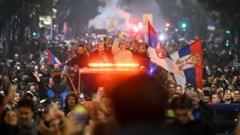
Large celebrations were seen in the capital, Belgrade, after Vucic's concession, with people dancing and setting off fireworks. David Vasic, one of the celebrants, told the BBC, "Things will improve now." Reports indicated that the Student Movement, which includes members from various fields such as doctors, artists, and athletes, had wide support from voters across the country.
Analysis & context
Analysis & Context
Analytically, these elections represent a turning point in Serbian politics, showing that the power of youth and popular anger can change the course of the country. The Student Movement, which lacked clear leaders and included members from various segments of society, succeeded in attracting anti-government voters from all over Serbia. In a broader context, these elections reflect the challenges faced by traditional political systems in Eastern Europe, where young people are seeking fundamental changes in governance and transparency. Additionally, these elections highlight the importance of high popular participation in changing the political system, with the record-breaking turnout contributing to the Student Movement's victory.